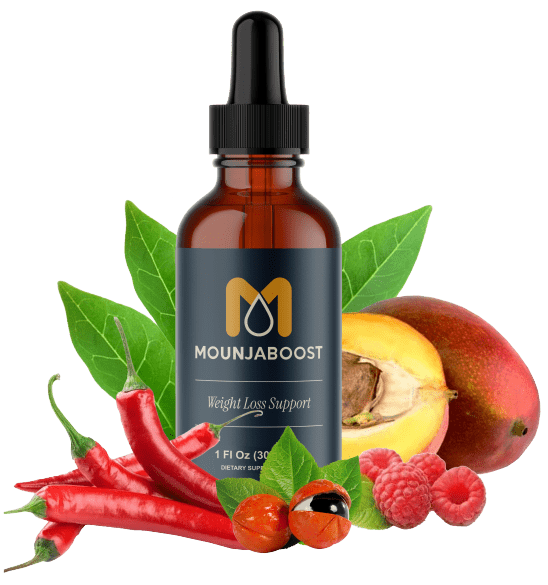
Cayenne pepper thermogenesis is one of the most cited mechanisms in the weight loss supplement industry — and one of the most misrepresented. The claim sounds straightforward: eat hot peppers, burn more calories, lose fat faster. But when you dig into the actual clinical literature, the picture gets more complicated. Dosages matter. Duration matters. And whether a supplement actually delivers a clinically relevant amount of capsaicin — the active compound responsible for the heat and the metabolic effect — matters most of all. This page investigates what the research genuinely supports, what it doesn't, and how MounjaBoost's cayenne pepper extract fits into that picture.
Key Takeaways
- Capsaicin, the active compound in cayenne pepper, has peer-reviewed support for modest thermogenic and appetite-suppressing effects at specific doses.
- Clinical studies typically use capsaicin doses ranging from roughly 2 mg to 10 mg per serving — dosage transparency in supplements is inconsistent.
- Cayenne pepper's metabolism-boosting effect is real but modest; it isn't a standalone fat-loss solution.
- MounjaBoost includes Cayenne Pepper Fruit Extract as one of 8 plant-based ingredients in a liquid drop formula manufactured in an FDA-registered, GMP-certified US facility.
- The strongest evidence supports cayenne pepper as a supporting ingredient in a multi-compound formula — not as a primary driver of weight loss on its own.
What Is Cayenne Pepper Thermogenesis?
Cayenne pepper thermogenesis refers to the increase in heat production — and therefore calorie expenditure — triggered by capsaicin, the primary bioactive compound in cayenne pepper fruit. According to the NIH's National Center for Complementary and Integrative Health, capsaicin activates TRPV1 receptors in the body, which are involved in temperature regulation and energy metabolism.
This activation is associated with a measurable, if modest, increase in metabolic rate.
Definition: Thermogenesis
Thermogenesis is the process by which the body generates heat. Diet-induced thermogenesis — triggered by certain foods and compounds including capsaicin — can temporarily increase calorie burn above your baseline resting metabolic rate.
The mechanism works like this: capsaicin binds to TRPV1 receptors, which signals the sympathetic nervous system to increase norepinephrine release. That cascade nudges the body toward burning stored fat for energy and raises core temperature slightly. The effect is real. The question is how large it's, and whether supplement doses are sufficient to replicate what clinical trials actually used.
The bottom line: thermogenesis from cayenne pepper is a documented physiological response, not marketing fiction — but the magnitude depends heavily on dose, frequency, and individual tolerance.
How Does Capsaicin Actually Trigger Fat Burning?
Capsaicin's fat-burning pathway involves two primary mechanisms: increased energy expenditure through thermogenesis, and reduced caloric intake through appetite modulation. Peer-reviewed studies indicate that capsaicin may stimulate the oxidation of fat as a fuel source, mainly when combined with moderate physical activity. The scientific consensus is still forming on long-term effects, but short-term metabolic data is reasonably consistent.
Here's what the research pathway looks like in practice:
- TRPV1 receptor activation: Capsaicin binds to vanilloid receptors in the gut and peripheral tissues, triggering a sympathetic nervous system response.
- Norepinephrine release: This stimulates lipolysis — the breakdown of fat stored in adipose tissue — making fatty acids available as fuel.
- Elevated resting metabolic rate: Some studies suggest a temporary increase in calorie burn following capsaicin consumption, though the effect size varies across individuals.
- Appetite suppression: Growing evidence suggests capsaicin may reduce appetite and caloric intake at subsequent meals, though the mechanism isn't fully established.
- Reduced fat accumulation: Early research indicates capsaicin may inhibit pre-adipocyte differentiation — essentially interfering with the formation of new fat cells — though this evidence is largely preclinical.
What this means: the fat-burning case for capsaicin isn't built on one trick. It's a multi-pathway effect, which is why researchers and formulators keep returning to it. But none of these pathways work in isolation, and none of them replace a caloric deficit.
What Does the Clinical Evidence Actually Show?
The clinical evidence for cayenne pepper's metabolic effects is real, peer-reviewed, and — critically — bounded by specific conditions. In a 2011 study published in Physiology & Behavior, researchers found that capsaicin consumption was associated with reduced appetite and increased feelings of fullness in participants who did not regularly consume spicy food. The effect was less pronounced in habitual spice consumers, suggesting tolerance develops over time.
A separate line of research has examined capsaicin's effect on energy expenditure. Some evidence indicates that acute capsaicin intake may increase metabolic rate by a small percentage above baseline — though estimates vary across studies and the effect appears to diminish with repeated daily use as the body adapts.
Here's what I'd flag as a red flag in how this ingredient is often marketed: the word "clear" gets thrown around a lot. But when you look at the actual numbers in controlled trials, the calorie-burn increase from capsaicin alone is modest — not a dramatic transformation on its own. It's a supporting player, not the lead.
The Claim vs. The Evidence — a direct comparison:
| Marketing Claim | What Research Actually Supports | Evidence Quality |
|---|---|---|
| "Burns fat fast" | May modestly increase fat oxidation acutely; long-term fat loss data is limited | Mixed / Moderate |
| "Boosts metabolism dramatically" | Small, temporary increase in resting metabolic rate observed in some trials | Moderate (short-term) |
| "Suppresses appetite" | Some evidence for reduced appetite in non-habitual consumers; effect diminishes with tolerance | Moderate |
| "Backed by clinical data weight loss" | Weight loss outcomes in human trials are modest and context-dependent | Weak to Moderate |
| "Targets stubborn belly fat" | No strong clinical evidence for site-specific fat reduction | Weak / Preclinical only |
The table above reflects the honest state of the evidence as of 2026. Capsaicin has a real metabolic effect. The claims that stretch beyond what the data supports are where you need to be skeptical — and where most supplement marketing goes wrong.
Cayenne Pepper Metabolism Boost: What Dosage Do Studies Actually Use?
Dosage is where most supplement discussions fall apart. The clinical literature on cayenne pepper metabolism boost effects typically uses specific, measured doses of capsaicin — not vague "branded mixs" that obscure how much you're actually getting.
Understanding the dosage gap between research and retail products is one of the most important things you can do before buying any supplement containing this ingredient.
Definition: Capsaicin vs. Cayenne Pepper Extract
Capsaicin is the specific compound responsible for cayenne's metabolic effects. Cayenne pepper extract is standardized to a percentage of capsaicinoids (which include capsaicin). A "6% capsaicinoid" extract means 6% of the extract's weight is active capsaicinoids — so the total extract dose and the standardization percentage both matter.
According to research reviewed by the European Food Safety Authority, studies examining capsaicin's thermogenic effects have used many doses. Some trials used as little as 2–3 mg of capsaicin per serving; others used up to 10 mg or more.
The metabolic response appears dose-dependent, meaning higher doses within a tolerable range tend to produce larger effects — up to a point where GI discomfort becomes a limiting factor.
What to look for on a supplement label:
- The total milligram dose of cayenne pepper extract per serving
- The standardization percentage (e.g., "standardized to 8% capsaicinoids")
- Whether the ingredient is inside a custom formula (which hides individual doses)
- Third-party lab testing confirming the stated potency
- The serving frequency — once daily vs. multiple times daily changes the total daily dose
The bottom line: if a supplement doesn't tell you the capsaicin content or the standardization of its cayenne extract, you have no way to evaluate whether it delivers a clinically relevant dose. That's a transparency problem worth noting.
Red Flags to Watch For in Cayenne Pepper Supplements
After 12 years reviewing supplement formulations and compliance documentation, I've seen the same patterns repeat. Here's what should make you pause before purchasing any cayenne-containing weight loss product.
- House blends with no individual doses: If the label lists "Thermogenic Blend 500mg" with cayenne as one of six ingredients, you don't know if you're getting 5mg or 450mg of cayenne. That's not transparency — that's concealment.
- Exaggerated calorie-burn claims: Claims of "burning 500 extra calories per day" from capsaicin alone are not supported by the clinical literature. If you see numbers like that without a citation, treat them as marketing noise.
- No third-party testing documentation: Any reputable manufacturer should be able to provide a Certificate of Analysis (COA) from an independent lab. If they can't or won't, that's a problem.
- "Supported by clinical trials" without a citation: This phrase is used so loosely it's nearly meaningless. Ask: proven in what study, at what dose, in what population?
- Tolerance not mentioned: The research is fairly clear that the appetite-suppressing and thermogenic effects of capsaicin diminish with regular use as the body adapts. A supplement that doesn't acknowledge this is either uninformed or not being straight with you.
None of these red flags automatically mean a product is fraudulent. But they do mean you're working with incomplete information — and incomplete information is how people waste money on supplements that don't deliver.
Cayenne Pepper Weight Loss: Is the Evidence Strong Enough to Matter?
The cayenne pepper weight loss evidence base is real but modest. A 2012 meta-analysis published in Appetite examined multiple trials on capsaicin and energy balance, concluding that capsaicin consumption was associated with small reductions in energy intake and small increases in energy expenditure. The authors noted that the effects were more pronounced in individuals who did not regularly consume spicy foods, and that the practical impact on body weight over time remained unclear from the available data.
That's an honest summary of where the science stands. Not "cayenne cures obesity." Not "capsaicin is useless." Somewhere in between — a real but modest effect that works best as part of a broader approach.
Where cayenne pepper weight loss claims go wrong is in the extrapolation. A study showing reduced appetite at one meal gets turned into "melts fat around the clock." A small increase in metabolic rate becomes "turbocharges your metabolism." You deserve better than that translation.
The bottom line: cayenne pepper may support weight management as part of a multi-ingredient formula and a calorie-controlled diet. It isn't a standalone solution, and the evidence doesn't support treating it as one.

How Does MounjaBoost Use Cayenne Pepper Extract?
MounjaBoost includes Cayenne Pepper Fruit Extract as one of eight plant-based ingredients in its liquid drop formula. The product is manufactured in the USA in an FDA-registered, GMP-certified facility, which addresses one of the baseline quality concerns I look for in any supplement. As of 2026, the formula is delivered in liquid drop form — which some research suggests may improve bioavailability compared to hard capsules, though the evidence on this specific point isn't definitive.
Definition: GMP-Certified Facility
Good Manufacturing Practice (GMP) certification means a facility follows FDA-regulated standards for cleanliness, ingredient verification, and quality control. It doesn't guarantee a product works — but it does mean the product contains what the label says it contains.
The full MounjaBoost ingredient list includes: Maca Root Extract, African Mango Seed Extract, Green Tea Leaf Extract, Guarana Seed Extract, Cayenne Pepper Fruit Extract, Korean Turmeric Extract, Coleus Forskohlii Root Extract, and Raspberry Ketones. Each of these has its own evidence profile.
Cayenne pepper sits alongside Green Tea Extract and Guarana as the thermogenic-leaning components of the formula — ingredients with overlapping mechanisms that may work together to support metabolism and fat oxidation.
The liquid drop delivery is worth noting from a user experience standpoint: it dissolves easily, there's no capsule to swallow, and the formula is designed for straightforward daily use. For people who struggle with large supplement capsules, that's a practical advantage.
What I can't independently verify without a COA: the exact milligram dose of cayenne pepper extract per serving and its capsaicinoid standardization percentage. That's the transparency gap I'd want closed before making a definitive dosage assessment. What I can confirm is that the manufacturing environment meets federal quality standards.
What Are Real Users Saying About MounjaBoost?
Customer testimonials don't replace clinical evidence, but they do provide real-world signal about whether a product's effects translate outside a lab setting. Here's what verified purchasers have reported:
Daniel M. (5★): "No matter what I tried, my weight just wouldn't budge, especially around my belly. MounjaBoost kick-started my metabolism and finally helped me shed 29 stubborn pounds. I feel lighter and more energetic, and my clothes are fitting so much better now – it's a huge relief."
Rachel T. (5★): "Being overweight made even basic activities exhausting. I could hardly play with my kids without feeling out of breath. After using MounjaBoost, I've dropped 40 pounds, and I can keep up with my kids without feeling tired all the time. I have my energy and freedom back!"
Sophie R. (5★): "I always felt self-conscious about my appearance, especially in social situations. Since trying MounjaBoost, I've lost 35 pounds, and for the first time in years, I actually enjoy looking in the mirror. It's incredible how this change has boosted my confidence and made me feel like myself again!"
These are individual results and won't be universal. Weight loss outcomes depend on diet, activity level, starting point, and consistency.
But the pattern across these reports — improved energy, reduced stubborn fat, better daily function — aligns with what the multi-ingredient formula is designed to support. The cayenne pepper component in particular may be contributing to the metabolic and energy effects users describe.
Is MounjaBoost's Cayenne Pepper Ingredient Worth Your Attention?
Here's my honest assessment after reviewing the ingredient evidence and the product's manufacturing claims. Cayenne pepper thermogenesis is a legitimate mechanism backed by peer-reviewed research. The effect is real, the pathway is understood, and the safety profile at reasonable doses is well-established. The question is always whether a specific product delivers a dose that matters.
MounjaBoost's strengths on this ingredient:
- Manufactured in an FDA-registered, GMP-certified US facility — baseline quality is addressed
- Liquid drop delivery may support absorption, though this isn't definitively proven for capsaicin namely
- Cayenne is paired with complementary thermogenic ingredients (Green Tea, Guarana) that may reinforce its effects
- Plant-based, non-habit-forming formula — no synthetic stimulants that could amplify side effects
Where I'd want more transparency:
- Exact milligram dose of cayenne pepper extract per serving
- Capsaicinoid standardization percentage
- Publicly available COA from an independent third-party lab
The bottom line: if you're evaluating MounjaBoost to be exact for its cayenne pepper content, the ingredient has legitimate science behind it. The formula's multi-ingredient approach is the right strategy — no single compound does everything. Whether the specific dose in MounjaBoost hits the clinically studied range is the open question, and that's worth asking the company directly.
How To Order MounjaBoost
- Visit the official MounjaBoost website — go directly to the manufacturer's site to ensure you're getting the authentic formula and current pricing. Third-party resellers may carry outdated stock or counterfeit versions.
- Select your package — MounjaBoost is available in single-bottle and multi-bottle bundles. Multi-bottle options typically offer better per-unit value and are worth considering if you plan to use the product for 90 days or more, which aligns with the timeframe most users report meaningful results.
- Complete your order and confirm your guarantee — verify the refund policy before checkout. Reputable supplement companies offer a money-back guarantee; confirm the terms and keep your order confirmation email.
See today's pricing and available packages →
Frequently Asked Questions
Ready to Try MounjaBoost?
Includes free US shipping and a 60-day guarantee on every order.
View Latest Offer ➔