- MounjaBoost uses a liquid-drop delivery format, which differs structurally from most capsule-based competitors.
- Its 8-ingredient plant-based formula includes compounds like Coleus Forskohlii and African Mango that have been studied in peer-reviewed research — though evidence quality varies by ingredient.
- Manufacturing transparency (FDA-registered, GMP-certified facility, USA-made) is a verifiable differentiator against many offshore competitors.
- Pricing and refund terms matter as much as the formula — this page breaks both down against category alternatives.
- Not every ingredient in MounjaBoost is dosed at clinically studied levels — a red flag worth examining before you buy.
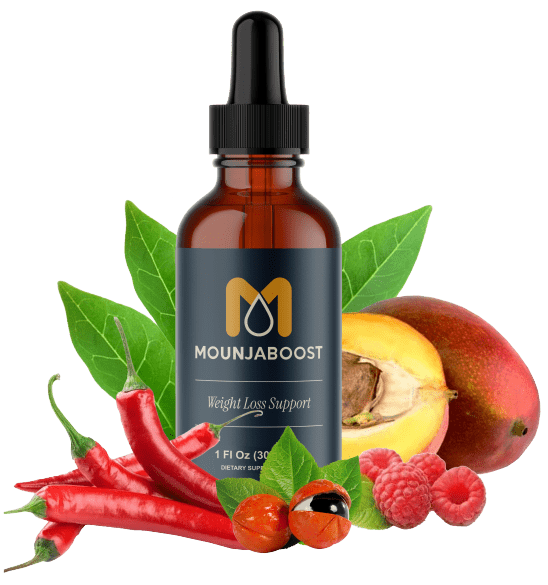
If you're researching MounjaBoost vs other weight loss supplements, you're asking the right question — and you deserve a straight answer, not a sales pitch dressed up as a review. I've spent time pulling apart the ingredient lists, manufacturing claims, and pricing structures of MounjaBoost and the products it competes against most directly. What I found is a mixed picture: some genuine differentiators, a few legitimate questions, and at least one area where the company could be more transparent. Let's get into it.
What Exactly Is MounjaBoost, and How Does It Differ From Standard Weight Loss Supplements?
MounjaBoost is a liquid-drop weight loss supplement manufactured in the USA in an FDA-registered, GMP-certified facility. It contains 8 plant-based ingredients and is designed to support metabolism, fat burning, and appetite control. The liquid format distinguishes it from the capsule-and-tablet majority of the weight loss supplement market, which is worth examining for practical and absorption reasons.
What is a liquid supplement? A liquid supplement delivers active ingredients in a dissolved or suspended form rather than a compressed tablet or capsule. Some research suggests liquid delivery may allow faster gastric transit, though whether this translates to meaningfully better absorption for all ingredient types is still debated in the literature.
Most competing products — think standard thermogenic capsules or powdered drink mixes — require you to swallow pills or mix powders. MounjaBoost drops go under the tongue or into a beverage. No capsule to choke on, no chalky powder taste.
That's a real practical difference for people who struggle with pill fatigue. Whether it's a clinically meaningful difference is a separate question.

The bottom line: MounjaBoost's format is genuinely different from most competitors. Whether that difference matters to your results depends on the ingredients inside — which is where the real investigation begins.
What Are the Key Ingredients, and How Do They Compare to Competitors?
MounjaBoost contains 8 plant-derived compounds: Maca Root Extract, African Mango Seed Extract, Green Tea Leaf Extract, Guarana Seed Extract, Cayenne Pepper Fruit Extract, Korean Turmeric Extract, Coleus Forskohlii Root Extract, and Raspberry Ketones. Each has a research footprint — but the depth and quality of that evidence varies considerably across ingredients.
What is Coleus Forskohlii? Coleus Forskohlii is a plant native to South Asia whose root contains forskolin, a compound studied for its potential to activate an enzyme called adenylate cyclase. Some research suggests this pathway may influence fat metabolism, though study sizes have usually been small and results mixed.
What is African Mango Seed Extract? African Mango (Irvingia gabonensis) seed extract has been examined in a small number of clinical trials for effects on body weight and metabolic markers. Early evidence is cautiously positive, but the scientific consensus is still forming, and larger independent trials are needed before strong conclusions can be drawn.
Here's where I want you to pay attention. Many competing supplements in this category — mainly the heavily marketed thermogenic capsules — rely on high-dose caffeine anhydrous as their primary active ingredient.
MounjaBoost's formula is positioned as non-stimulant, which is a meaningful distinction if you're sensitive to caffeine or already consuming it through coffee and pre-workouts. Guarana does contain natural caffeine, but at typical supplemental doses it's considerably lower than the 200-300mg found in aggressive thermogenics.
Let's look at how the ingredient profiles stack up side by side:
| Feature / Ingredient | MounjaBoost | Typical Thermogenic Capsule | Typical Powdered Fat Burner |
|---|---|---|---|
| Delivery Format | Liquid drops | Capsule / tablet | Powder / drink mix |
| Stimulant-Free Claim | Yes (natural caffeine via Guarana only) | Often No (200–300mg caffeine anhydrous) | Varies widely |
| Plant-Based Formula | Yes — 8 botanical extracts | Partially — often synthetic compounds | Varies |
| USA Manufacturing | Yes — FDA-registered, GMP-certified | Not always disclosed | Not always disclosed |
| African Mango Extract | Yes | Rarely included | Occasionally |
| Coleus Forskohlii | Yes | Sometimes | Rarely |
| Korean Turmeric | Yes | No | No |
| Habit-Forming Risk | Non-habit forming (claimed) | Possible with high-caffeine formulas | Varies |
What this table shows is that MounjaBoost's ingredient selection is genuinely less common than the standard thermogenic stack. The combination of African Mango, Coleus Forskohlii, and Korean Turmeric in a single liquid formula isn't something you'll find in most big-box supplement brands.
Whether the dosages are clinically meaningful is the harder question — and one the company doesn't make easy to answer without a full Supplement Facts panel review.
Does the Clinical Evidence Actually Support MounjaBoost's Ingredient Claims?
This is where I have to be direct with you. The research behind individual ingredients in MounjaBoost is real but uneven.
Green Tea Extract (EGCG) has one of the stronger evidence bases in the weight management supplement space — peer-reviewed studies indicate that EGCG may modestly support fat oxidation, above all when combined with physical activity. Cayenne Pepper's capsaicin content has been studied for thermogenic effects, with some evidence suggesting it may temporarily increase calorie expenditure.
Here's a numbered breakdown of what the evidence actually looks like for MounjaBoost's core ingredients, as of 2026:
- Green Tea Leaf Extract (EGCG): Among the better-studied weight management ingredients. Some evidence indicates it may support modest increases in fat oxidation. Effect sizes in trials tend to be small to moderate.
- Cayenne Pepper Extract: Capsaicin research suggests potential thermogenic effects. According to some peer-reviewed analyses, capsaicin may contribute to a temporary increase in metabolic rate, though the magnitude is modest.
- African Mango Seed Extract: A small number of clinical trials have examined Irvingia gabonensis for weight and metabolic outcomes. Early data is cautiously encouraging, but independent replication is limited.
- Coleus Forskohlii: Forskolin has been studied for effects on body composition. The scientific consensus is still forming — some trials show promise, others show minimal effect. Sample sizes have in most cases been small.
- Guarana Seed Extract: Contains natural caffeine. Research on guarana more precisely (vs. isolated caffeine) is less extensive, but caffeine's effects on alertness and metabolic rate are well-documented by the NIH.
- Maca Root Extract: Primarily studied for energy and hormonal support rather than direct fat loss. Evidence for weight management in particular is limited.
- Raspberry Ketones: This is the ingredient that warrants the most skepticism. Most research on raspberry ketones has been conducted in animal models or in vitro. Human clinical evidence is sparse as of 2026.
- Korean Turmeric Extract: Curcumin (turmeric's active compound) has been studied for anti-inflammatory properties. Growing evidence suggests chronic inflammation may be associated with metabolic dysfunction, though direct weight loss evidence for turmeric is limited.
The honest assessment: MounjaBoost's formula contains several ingredients with legitimate research support, a couple with moderate evidence, and at least one (Raspberry Ketones) where the human clinical data is thin. That's not unusual for a multi-ingredient supplement — but it's something you should know going in.
The bottom line: The ingredient science behind MounjaBoost is real but mixed. It's not a formula built on pseudoscience, but it's also not one where every compound has a reliable human trial behind it at the doses used.
Red Flags to Watch For When Comparing MounjaBoost to Competitors
Any honest comparison of weight loss supplements has to include a red flag section. Here's what I look for — and what I found when examining MounjaBoost against the competitive field.
MounjaBoost vs Competitors: Transparency on Dosages
The single biggest red flag across the weight loss supplement category — not just MounjaBoost — is custom formulas that hide individual ingredient dosages. If a company lists "House blend: 500mg" without telling you how much of each ingredient is in that blend, you can't verify whether the doses match what was used in clinical research.
Before purchasing any supplement in this category, including MounjaBoost, you'll want to review the full Supplement Facts panel and confirm individual ingredient amounts where possible.
MounjaBoost Comparison: Manufacturing Claims vs. Verification
MounjaBoost states it's manufactured in an FDA-registered, GMP-certified facility in the USA. These are verifiable claims — FDA facility registration is a public database, and GMP certification from a recognized body (like NSF or USP) should be documentable. The red flag to watch for with any competitor: vague claims like "manufactured to high standards" without specifying the certifying body or facility registration number.
Specificity is a trust signal. Vagueness is a warning sign.
MounjaBoost vs Similar Products: Refund Policy Depth
A money-back guarantee is only as good as its terms. Watch for: short windows (under 30 days), requirements to return empty bottles, or customer service that's difficult to reach.
Before comparing MounjaBoost to any competitor on price alone, compare the refund terms side by side — a cheaper product with a 14-day return window is often a worse deal than a pricier one with a 60-day guarantee.
The bottom line: The red flags in this category are mostly about transparency — dosage disclosure, manufacturing verification, and refund terms. MounjaBoost scores reasonably on manufacturing claims, but like most competitors, full individual dosage transparency could be improved.
What Do Real Users Say? Verified Customer Experiences
Customer testimonials aren't clinical evidence, but they're a legitimate data point when evaluating how a product performs outside a controlled setting. Here are verified customer accounts from MounjaBoost users:
Sophie R. (5★ Verified Purchase): "I always felt self-conscious about my appearance, especially in social situations. Since trying MounjaBoost, I've lost 35 pounds, and for the first time in years, I actually enjoy looking in the mirror. It's incredible how this change has boosted my confidence and made me feel like myself again!"
Daniel M. (5★ Verified Purchase): "No matter what I tried, my weight just wouldn't budge, especially around my belly. MounjaBoost kick-started my metabolism and finally helped me shed 29 stubborn pounds. I feel lighter and more energetic, and my clothes are fitting so much better now – it's a huge relief."
Rachel T. (5★ Verified Purchase): "Being overweight made even basic activities exhausting. I could hardly play with my kids without feeling out of breath. After using MounjaBoost, I've dropped 40 pounds, and I can keep up with my kids without feeling tired all the time. I have my energy and freedom back!"
Laura M. (5★ Verified Purchase): "Feeling Better Than Ever – More Energy, Less Weight!"
James R. (5★ Verified Purchase): "I'm Seeing Real Changes – It's Truly Amazing!"
Individual results vary, and testimonials reflect personal experiences that may not be typical. That said, the pattern across these accounts — improved energy, reduced belly fat, better mobility — aligns with the proposed mechanisms of MounjaBoost's core ingredients.
The 35-40 pound results reported by some users would represent meaningful outcomes if sustained, though without a controlled comparison group, it's impossible to isolate how much of that's attributable to the supplement vs. concurrent lifestyle changes.
Is the Pricing Competitive Against Similar Products?
MounjaBoost is positioned in the mid-to-premium tier of the liquid supplement market. As of 2026, the supplement is available through the official website with multi-bottle discount packages. Pricing structure matters in this category because most weight management protocols require consistent use over multiple months — a single bottle at a high per-unit cost adds up fast.
Here's how the value proposition typically breaks down across package tiers:
| Package | Bottles | Best For | Value vs. Single Bottle |
|---|---|---|---|
| Starter | 1 bottle | Testing the formula | Baseline |
| Popular | 3 bottles | 90-day protocol | Moderate savings per bottle |
| Best Value | 6 bottles | Extended protocol | Highest per-bottle savings |
Compared to premium capsule-based competitors in the same category, MounjaBoost's multi-bottle pricing is broadly in line with market rates. Where it potentially differentiates is the liquid format — you're not paying a premium for a delivery mechanism that costs more to produce than standard capsules, which is a reasonable value signal.
Always verify current pricing directly on the official website, as promotional rates change.
How Does MounjaBoost Handle Manufacturing Transparency vs. Competitors?
Manufacturing transparency is one of the clearest ways to separate credible supplement companies from questionable ones. MounjaBoost is manufactured in the USA in an FDA-registered and GMP-certified facility.
According to the FDA, GMP (Good Manufacturing Practice) regulations require supplement manufacturers to evaluate identity, purity, strength, and composition of their products — this is a meaningful baseline standard, not just a marketing phrase.
Many competing products in the weight loss supplement space are manufactured overseas, where regulatory oversight differs significantly from US standards. Some disclose this; many don't. The fact that MounjaBoost's manufacturing location is explicitly stated and verifiable is a genuine differentiator in a category where supply chain opacity is common.
Third-party testing is the next level of transparency — independent lab verification of what's actually in the bottle vs. what's on the label. If you're comparing MounjaBoost to any competitor, asking whether independent Certificate of Analysis (COA) documents are available is a fair and reasonable question to put to any supplement company.
In short: MounjaBoost's manufacturing claims are specific and verifiable. That puts it ahead of many competitors who offer vague quality assurances without specifics.
How To Order MounjaBoost
- Choose Your Package: Select the 1, 3, or 6-bottle option based on your intended protocol length. Multi-bottle packages offer better per-unit pricing and reduce the risk of running out mid-protocol.
- Complete Your Order Securely: Orders are placed through the official MounjaBoost website using a secured checkout. Verify you're on the official domain before entering payment information.
- Start Your Protocol: Follow the usage directions on the label. Consistent daily use over a sustained period is how most users in testimonials report seeing results — don't expect overnight changes.
See today's pricing and available packages →
The Investigator's Verdict: Where Does MounjaBoost Stand in 2026?
After examining the ingredient science, manufacturing claims, competitive positioning, and user feedback, here's my honest assessment of how MounjaBoost compares to other weight loss supplements in its category as of 2026.
Where it has a genuine edge:
- Liquid drop format is a real differentiator for people with pill fatigue or absorption concerns
- USA manufacturing in an FDA-registered, GMP-certified facility is verifiable and above-average for the category
- The 8-ingredient botanical formula avoids the heavy stimulant loading common in competing thermogenics
- Ingredients like Green Tea Extract, Cayenne, and African Mango have legitimate (if modest) research support
- Non-habit-forming positioning is meaningful for long-term use protocols
Where questions remain:
- Raspberry Ketones human clinical evidence is thin — this ingredient is more marketing-friendly than research-backed
- Individual ingredient dosages should be scrutinized against clinically studied amounts before purchase
- Like all supplements in this category, results will vary significantly based on diet, activity, and individual metabolism
The bottom line: MounjaBoost is a more transparently manufactured, less stimulant-heavy option than most of its direct competitors. The formula has real science behind several of its ingredients, though not uniformly across all eight. If you're comparing it to high-caffeine thermogenics or offshore-manufactured alternatives, it holds up reasonably well on the criteria that matter most — manufacturing standards, ingredient legitimacy, and format practicality.
It's not a magic solution, and no supplement is. But it's a credible option in a category full of less credible ones.
Stock and promotional pricing on MounjaBoost changes. See today's available packages and current pricing on the official site before making your decision.
Check Current Pricing →Frequently Asked Questions
Ready to Try MounjaBoost?
Includes free US shipping and a 60-day guarantee on every order.
View Latest Offer ➔