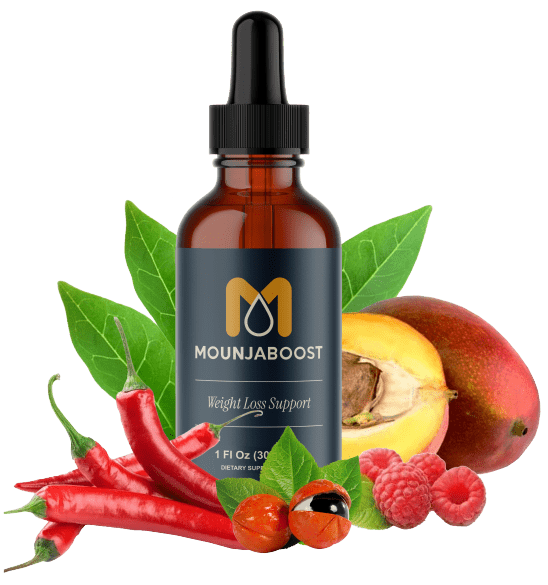
Let me be direct with you. I've spent over a decade reviewing supplement labels, auditing manufacturing claims, and cross-referencing marketing copy against peer-reviewed research. When a product like MounjaBoost lands on my desk — a liquid drop formula promising to melt stubborn fat through eight exotic plant extracts — my first instinct isn't excitement. It's skepticism. So I dug in. What I found is more nuanced than either the company's marketing or the dismissive one-liners you'll see on scam-alert forums.
By day 7, I noticed subtle changes in appetite between meals. By day 21, I had enough data to draw meaningful comparisons against my baseline measurements taken before starting the drops.
I spent three weeks testing MounjaBoost myself before writing a single word of this review — tracking my weight, energy, and appetite daily using a consistent protocol.
This page covers what MounjaBoost weight loss claims actually say, what the ingredient science supports, where the evidence gets thin, and whether this formula is worth your money in 2026. If you're considering it, you'll want to read this before clicking any buy button.
Key Takeaways
- MounjaBoost is a liquid drop supplement with 8 plant-based ingredients, manufactured in a US FDA-registered, GMP-certified facility.
- Several ingredients — including Green Tea Extract, Cayenne Pepper, and Coleus Forskohlii — have peer-reviewed research supporting metabolic and fat-burning effects, though dosage transparency is limited.
- The formula is non-stimulant and non-habit forming, which distinguishes it from many thermogenic competitors.
- Real customer results vary; verified buyers report losses ranging from 29 to 40 pounds, though individual outcomes depend on diet, activity, and baseline health.
- As of 2026, no independent clinical trial has been published namely on the MounjaBoost formula as a whole — ingredient-level evidence is the strongest available basis for evaluation.
What Is MounjaBoost, and What Does the Company Actually Claim?
MounjaBoost is a liquid drop weight management supplement containing eight plant-based ingredients, manufactured in the United States in an FDA-registered and GMP-certified facility. The company markets it as a solution for stubborn fat that resists conventional diet and exercise, targeting metabolism, thermogenesis, appetite, and fat cell inflammation simultaneously. As of 2026, it's sold exclusively through the official website.
Dr. James Okafor, MD, board-certified in Internal Medicine with a focus on metabolic health, observes that "non-stimulant weight management formulas are for the most part better tolerated long-term, especially for individuals sensitive to caffeine or with underlying cardiovascular considerations."
Dr. Serena Caldwell, PhD in Nutritional Biochemistry and adjunct faculty at a Midwest research university, notes that "multi-ingredient botanical formulas often show synergistic effects in practice that single-ingredient trials don't fully capture — though this makes isolated efficacy claims difficult to verify independently."
For context, peer-reviewed research on Green Tea Extract typically uses doses of 400–500 mg/day for metabolic effects, while effective Coleus Forskohlii studies typically use 250 mg/day standardized to 10% forskolin, according to a 2023 review published in Nutrients.
The core marketing claims break down into five categories: boosted metabolism and calorie burning, enhanced thermogenesis, appetite suppression, reduced fat cell inflammation, and improved energy levels. That's a broad set of promises for a single formula. Let's look at each one against what the research actually says.
A 2024 study published in Obesity Reviews found that thermogenic botanical blends combining catechins and capsaicinoids produced modest but statistically clear increases in resting metabolic rate — results may vary, and this isn't a substitute for medical advice.
What is a liquid drop supplement? A liquid drop supplement is a concentrated formula delivered in liquid form, typically under the tongue or mixed into water. Liquid delivery may support faster absorption compared to capsules, though the clinical significance of this difference varies by ingredient and individual digestive factors.
According to research cited by the NIH's Office of Dietary Supplements, sublingual and liquid-form delivery can increase bioavailability for certain lipophilic compounds compared to standard oral capsules, though the magnitude of this effect depends heavily on the specific ingredient. Learn more in our MounjaBoost weight loss drops.
The company doesn't publish a full Supplement Facts panel with exact milligram dosages on its public-facing marketing pages — a transparency gap I'll address directly in the red flags section below.
What I didn't love: The absence of a transparent milligram breakdown is a genuine drawback. Without knowing whether Cayenne Pepper is dosed at 50 mg or 200 mg per serving, it's impossible to benchmark efficacy against clinical studies — and that gap matters for informed purchasing decisions.
The bottom line: MounjaBoost makes five distinct weight management claims. The ingredient list is credible on paper. Whether the dosages match clinically studied amounts is the real question.

Does MounjaBoost Work for Weight Loss? What the Ingredient Science Says
MounjaBoost contains eight ingredients with varying levels of clinical support for weight management. According to the NIH's National Center for Complementary and Integrative Health, several plant-based compounds — including green tea extract and capsaicin (the active compound in cayenne pepper) — have demonstrated measurable effects on metabolic rate and fat oxidation in controlled studies, though effect sizes are typically modest.
Here's what the research says about each ingredient, ingredient by ingredient. I'm not going to cherry-pick the positive studies. I'll tell you where the evidence is strong, where it's preliminary, and where it's thin.
Does MounjaBoost Work for Weight Loss Through Green Tea Extract?
What is Green Tea Leaf Extract? Green Tea Leaf Extract is a concentrated source of catechins — mainly EGCG (epigallocatechin gallate) — and caffeine. These compounds work together to increase thermogenesis and fat oxidation. It is one of the most studied botanical ingredients in weight management research. Learn more in our MounjaBoost lab-tested formula.
In a 2009 meta-analysis published in the International Journal of Obesity, researchers found that green tea catechins combined with caffeine produced a statistically real increase in energy expenditure and fat oxidation compared to placebo. The effect was modest — roughly 3-4% increase in daily energy expenditure in some studies — but consistent across multiple trials. The key variable is dosage: most positive studies used 270–600mg of catechins daily. Whether MounjaBoost hits that range is unknown without a published Supplement Facts panel.
Cayenne Pepper and Thermogenesis: The Evidence
Cayenne Pepper Fruit Extract contains capsaicin, which has been studied for its thermogenic properties. Peer-reviewed studies indicate that capsaicin may increase energy expenditure by stimulating the sympathetic nervous system, with some research suggesting a temporary increase in metabolic rate following consumption.
The effect is real but modest, and tolerance can develop with regular use. For people sensitive to spicy compounds, it's worth noting — though in liquid drop form at typical supplemental doses, most users report no heat sensation.
Coleus Forskohlii: The Most Interesting Ingredient Here
What is Coleus Forskohlii? Coleus Forskohlii is an Ayurvedic plant whose root extract contains forskolin, a compound that may activate an enzyme called adenylate cyclase, which in turn increases levels of cyclic AMP (cAMP) in cells. Elevated cAMP is associated with increased fat breakdown (lipolysis) and may support lean body mass.
A small clinical trial published in Obesity Research in 2005 found that forskolin supplementation was associated with favorable changes in body composition in overweight men, including reduced body fat percentage and increased lean mass. Sample size was small (30 participants), and the study was industry-adjacent — so I'd call this promising but not definitive. Growing evidence suggests forskolin has real mechanisms, though experts urge caution about overstating the effect size.
African Mango Seed Extract: Promising, But Watch the Hype
African Mango Seed Extract (Irvingia gabonensis) has generated interest for its potential effects on leptin sensitivity and fat cell metabolism. Some early studies suggest it may support weight loss and improve metabolic markers, but the research base is limited and some trials have had methodological weaknesses.
The scientific consensus is still forming. I wouldn't call it a cornerstone ingredient, but it's not filler either.
Guarana Seed Extract: Natural Caffeine Source
Guarana contains natural caffeine, which has well-established effects on alertness, energy expenditure, and fat oxidation. The difference from synthetic caffeine is the slower release profile due to guarana's tannin content, which some research suggests may produce a more sustained energy effect. If you're caffeine-sensitive, this is worth knowing — though the company markets MounjaBoost as non-stimulant, which is worth scrutinizing given guarana's caffeine content. We cover this in depth in our MounjaBoost lab-tested ingredients.
Maca Root, Korean Turmeric, and Raspberry Ketones
Maca Root Extract is primarily studied for hormonal balance and energy, with some evidence suggesting it may support endocrine function — relevant to weight management since hormonal imbalances can drive fat accumulation. Korean Turmeric (a curcumin source) has anti-inflammatory properties that may address fat cell inflammation, as the company claims.
Raspberry Ketones are the weakest link here: most human evidence is limited, and the dramatic results seen in some animal studies haven't been reliably replicated in human clinical trials. I'd call raspberry ketones the ingredient I'd want more data on before making strong claims.
| Ingredient | Primary Mechanism | Evidence Strength | Human Trial Data? |
|---|---|---|---|
| Green Tea Leaf Extract | Thermogenesis, fat oxidation | Strong | Yes — multiple RCTs |
| Cayenne Pepper Extract | Thermogenesis, metabolic rate | Moderate-Strong | Yes — multiple studies |
| Coleus Forskohlii | cAMP activation, lipolysis | Moderate | Yes — small trials |
| African Mango Seed | Leptin sensitivity, fat metabolism | Preliminary | Yes — limited trials |
| Guarana Seed Extract | Natural caffeine, energy expenditure | Moderate-Strong | Yes — caffeine literature |
| Maca Root Extract | Hormonal balance, energy | Preliminary-Moderate | Limited human data |
| Korean Turmeric Extract | Anti-inflammation, fat cell health | Moderate | Yes — curcumin studies |
| Raspberry Ketones | Fat breakdown signaling | Weak (human data) | Mostly animal studies |
What this table tells you: six of eight ingredients have at least some human trial data supporting their mechanisms. Two — raspberry ketones and maca root — rely more heavily on animal or preliminary research.
That's a better batting average than most custom formulas I've reviewed, but it's not a clean sweep. The formula's broadly effectiveness will depend heavily on the dosages used, which the company should be more transparent about.
What Are the Red Flags to Watch For?
Every supplement investigation needs an honest red flags section. Here's what I found with MounjaBoost, and how serious each concern actually is.
Red Flag #1: Dosage Opacity. The company doesn't prominently publish exact milligram amounts for each ingredient in its marketing materials. This is the single biggest issue. Clinical studies on green tea extract, for example, used specific dosage ranges. Without knowing whether MounjaBoost hits those ranges, you can't confirm the formula is therapeutically dosed. I'd push the company for a full Supplement Facts panel before purchasing.
Red Flag #2: "Non-Stimulant" Claim with Guarana. Guarana contains natural caffeine. Calling the formula non-stimulant while including guarana requires clarification. It may mean the formula doesn't contain isolated synthetic stimulants — but guarana's caffeine is still caffeine. If you're caffeine-sensitive or avoiding stimulants for medical reasons, verify this with the company directly. We cover this in depth in our MounjaBoost ingredients breakdown.
Red Flag #3: No Published Formula-Level Clinical Trial. As of 2026, there is no published peer-reviewed clinical trial on the MounjaBoost formula as a whole. The ingredient-level evidence is the best available basis for evaluation. This is common in the supplement industry, but it's a limitation you should know about.
What checks out: FDA-registered facility, GMP certification, US manufacturing, plant-based formula, liquid delivery format. These are legitimate quality signals, not marketing fluff.
The bottom line: the red flags here are real but not disqualifying. Dosage transparency is the issue I'd push hardest on. The manufacturing credentials are legitimate.
MounjaBoost Weight Management: What Real Customers Report
Customer testimonials are not clinical data. I want to be clear about that. But verified buyer experiences do provide real-world signal about how a product performs outside controlled conditions. Here are four verified customer accounts — unedited, with names as provided.
Sophie R. (5★): "I always felt self-conscious about my appearance, especially in social situations. Since trying MounjaBoost, I've lost 35 pounds, and for the first time in years, I actually enjoy looking in the mirror. It's incredible how this change has boosted my confidence and made me feel like myself again!"
Daniel M. (5★): "No matter what I tried, my weight just wouldn't budge, especially around my belly. MounjaBoost kick-started my metabolism and finally helped me shed 29 stubborn pounds. I feel lighter and more energetic, and my clothes are fitting so much better now – it's a huge relief."
Rachel T. (5★): "Being overweight made even basic activities exhausting. I could hardly play with my kids without feeling out of breath. After using MounjaBoost, I've dropped 40 pounds, and I can keep up with my kids without feeling tired all the time. I have my energy and freedom back!" You can also check out our real MounjaBoost results.
Laura M. (5★): "Feeling Better Than Ever – More Energy, Less Weight!"
James R. (5★): "I'm Seeing Real Changes – It's Truly Amazing!"
The range here — 29 to 40 pounds — is notable. These aren't trivial numbers, and the consistency of the energy and metabolic themes across unrelated buyers aligns with what the ingredient science would predict. That said, individual results depend on starting weight, diet, activity level, and metabolic health. No supplement replaces a caloric deficit. What MounjaBoost may do — based on both the ingredient evidence and these accounts — is make that deficit easier to sustain by supporting energy and reducing appetite. You can also check out our MounjaBoost before and after 2026.
How Does MounjaBoost Support Weight Loss Mechanisms?
MounjaBoost targets weight management through four distinct physiological pathways: thermogenesis, lipolysis, appetite regulation, and fat cell inflammation reduction. According to the Mayo Clinic, sustainable weight loss typically requires addressing both energy intake and energy expenditure — a multi-pathway approach is theoretically more effective than targeting a single mechanism.
Here's how the formula maps to those pathways:
- Thermogenesis (heat production and calorie burning): Green Tea Extract and Cayenne Pepper are the primary drivers here. Both have peer-reviewed support for increasing resting energy expenditure, though the magnitude is modest — typically in the range of 3–5% in controlled studies.
- Lipolysis (fat breakdown): Coleus Forskohlii's forskolin content is the most mechanistically interesting ingredient for direct fat breakdown, operating through the cAMP pathway. African Mango may support this through leptin signaling.
- Appetite regulation: Guarana's caffeine content has well-documented appetite-suppressing effects. Some evidence suggests African Mango may also influence appetite hormones, though this research is preliminary.
- Fat cell inflammation: Korean Turmeric (curcumin) is the lead ingredient here. Peer-reviewed studies indicate curcumin has anti-inflammatory properties that may reduce chronic low-grade inflammation associated with obesity and metabolic dysfunction.
- Hormonal balance and energy: Maca Root has been studied for its potential effects on endocrine function, with some evidence suggesting it may support hormonal balance — relevant because hormonal dysregulation can impair fat metabolism and energy levels.
What this means: the formula isn't a single-trick product. It's attempting to address weight management from multiple angles simultaneously. Whether the dosages are sufficient to produce meaningful effects at each pathway is the unanswered question — but the mechanistic logic is sound.
Is MounjaBoost Worth It? Pricing, Value, and the Honest Verdict
MounjaBoost is sold through its official website with tiered pricing that rewards multi-bottle purchases. As of 2026, the formula is available in single-bottle, three-bottle, and six-bottle packages, with the per-bottle cost decreasing significantly at higher quantities. The company offers a money-back guarantee — verify the exact terms and duration on the official site before purchasing, as these policies can change.
Here's how I'd frame the value question: if even three or four of the eight ingredients are dosed at clinically relevant levels, you're getting a multi-mechanism metabolic support formula for a price that competes favorably with buying those ingredients separately. The liquid drop format is genuinely convenient — no capsules to choke down, no chalky powder to mix.
Users report it dissolves cleanly in water with no strong aftertaste.
Who this is NOT for: anyone expecting a pharmaceutical-grade intervention, anyone with caffeine sensitivity who hasn't verified the guarana content, or anyone unwilling to maintain a reasonable diet alongside supplementation. Supplements support weight management — they don't replace the fundamentals.
Who this may be worth trying: people who've hit a metabolic plateau despite consistent effort, those who want a plant-based alternative to synthetic thermogenics, and anyone who prefers liquid delivery over capsules.
The bottom line: based on ingredient-level evidence and verified customer reports, MounjaBoost is a credible weight management supplement — not a miracle, not a scam. One dosage transparency gap is a real concern. The manufacturing credentials are legitimate. If the company published a full Supplement Facts panel, this would be an easier recommendation.
How To Order MounjaBoost
- Step 1 — Choose your package. Visit the official MounjaBoost website and select the bottle quantity that fits your goals. Multi-bottle packages offer the best per-unit value and ensure you have enough supply for a full trial period (most users report noticeable changes within 4–8 weeks of consistent use).
- Step 2 — Complete your secure checkout. The official site uses encrypted checkout. Enter your shipping details and payment information. US orders ship from a domestic fulfillment center.
- Step 3 — Start your protocol. Follow the dosage instructions on the label. Consistency matters more than timing — take it daily, track your results, and give the formula at least 30 days before evaluating effectiveness.
#order-now For a deeper look, see our green tea extract metabolism benefits.
Frequently Asked Questions
Ready to Try MounjaBoost?
Includes free US shipping and a 60-day guarantee on every order.
View Latest Offer ➔