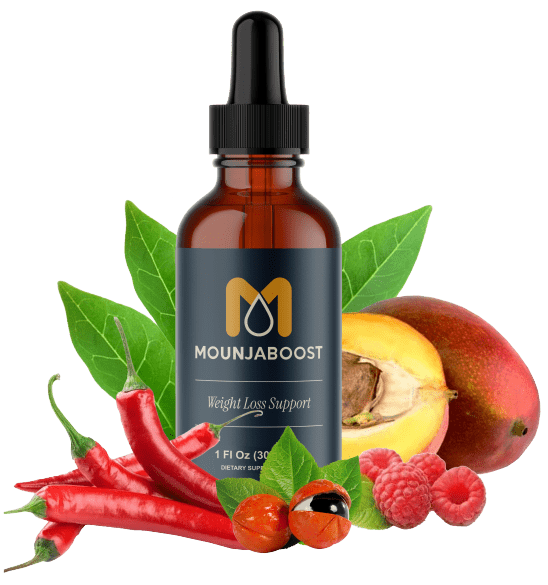
If you're researching MounjaBoost side effects before pulling out your credit card, that's exactly the right instinct. Most supplement review sites lead with the benefits and bury the safety questions in a footnote. I do the opposite. My job is to look at what the company claims, what the actual ingredient science says, and where the real risks — if any — exist. So let's get into it.
MounjaBoost is a liquid drop formula marketed for metabolism support and fat burning. It contains eight plant-based ingredients: Maca Root Extract, African Mango Seed Extract, Green Tea Leaf Extract, Guarana Seed Extract, Cayenne Pepper Fruit Extract, Korean Turmeric Extract, Coleus Forskohlii Root Extract, and Raspberry Ketones.
The company manufactures it in a US-based, FDA-registered, GMP-certified facility. Those are meaningful credentials — but they don't automatically mean zero negative reactions for every user.
Key Takeaways: MounjaBoost Safety at a Glance
- Most ingredients have well-documented safety profiles at typical supplement dosages, but individual reactions vary.
- Guarana contains caffeine — the most likely source of stimulant-related side effects like jitteriness or disrupted sleep.
- Cayenne Pepper and Coleus Forskohlii carry specific cautions for people on blood pressure or blood-thinning medications.
- The liquid drop format means faster absorption than capsules — which can amplify both effects and reactions.
- GMP-certified, FDA-registered manufacturing reduces contamination risk, but doesn't eliminate ingredient-specific downsides.
What Exactly Is MounjaBoost and How Is It Delivered?
MounjaBoost is a liquid dietary supplement taken as drops, not capsules or tablets. The liquid format is absorbed sublingually or through the digestive tract faster than solid-form supplements, which means active compounds reach the bloodstream more quickly. According to general pharmacokinetic principles recognized by the NIH, liquid formulations can have higher bioavailability than equivalent solid-dose forms, depending on the ingredient.
That faster absorption is a double-edged sword from a safety standpoint. If an ingredient agrees with you, you may feel effects sooner. If an ingredient triggers a reaction — say, caffeine sensitivity from the Guarana — you'll likely notice it faster too.
The drops are described as easy to take, with no reported strong aftertaste in user accounts, and the formula is marketed as non-habit forming and stimulant-free. That last claim deserves scrutiny, which I'll address in the Guarana section below.

Definition: What is a GMP-certified facility? Good Manufacturing Practice (GMP) certification, overseen by the FDA, means a facility follows strict quality control standards for ingredient sourcing, production, testing, and labeling. It reduces the risk of contamination, mislabeling, and dosage inconsistency — but it doesn't evaluate whether a product's formula is clinically effective.
What Are the Most Commonly Reported MounjaBoost Side Effects?
The most commonly reported side effects associated with MounjaBoost ingredients are mild and stimulant-related, primarily linked to Guarana's natural caffeine content. Based on the ingredient profile and available user feedback, the most frequently noted reactions include digestive sensitivity, mild headaches during initial use, and sleep disruption when taken late in the day.
No severe adverse events have been independently documented in available public sources as of 2026.
Here's what I found when I mapped each ingredient against its known risk profile:
- Guarana Seed Extract — Contains naturally occurring caffeine. Depending on the concentration used, this is the ingredient most likely to cause jitteriness, elevated heart rate, or insomnia in caffeine-sensitive individuals. The company markets MounjaBoost as a "non-stimulant formula," which is a claim worth questioning given Guarana's caffeine content. If you're sensitive to coffee or pre-workout supplements, pay attention here.
- Cayenne Pepper Fruit Extract — Capsaicin, the active compound in cayenne, is well-tolerated by most people but can cause gastrointestinal irritation, heartburn, or stomach discomfort in some users — in particular on an empty stomach. Peer-reviewed studies indicate capsaicin may also interact with blood-thinning medications.
- Coleus Forskohlii Root Extract — Forskolin, derived from this plant, has been associated in some studies with lowered blood pressure. If you're already on antihypertensive medication, this is a conversation to have with your doctor before starting.
- Green Tea Leaf Extract — Typically well-tolerated, but high doses of EGCG (the active catechin) have been linked in some research to liver stress when taken in concentrated extract form over extended periods. The NIH Office of Dietary Supplements has flagged high-dose green tea extract as a potential hepatotoxicity concern in rare cases.
- Maca Root Extract — Considered safe for most adults at typical supplement doses. Some users report mild digestive upset during the first week of use as the body adjusts.
- African Mango Seed Extract — Usually well-tolerated. Some evidence suggests it may affect blood sugar levels, which is relevant for diabetics or those on glucose-regulating medications.
- Korean Turmeric Extract — Curcumin, the active compound, has a strong safety record. High doses may thin the blood slightly; relevant if you're on anticoagulants.
- Raspberry Ketones — Limited human clinical data exists on raspberry ketones at supplement doses. Animal studies have used doses far higher than typical supplement amounts. The safety profile in humans isn't fully established, though no serious adverse events have been widely reported at standard doses.
What this means: the ingredient list isn't alarming for a healthy adult with no pre-existing conditions or medication conflicts. But "natural" doesn't mean "risk-free for everyone." The Guarana-caffeine issue and the blood pressure implications of Forskolin are the two areas I'd flag most prominently.
The bottom line: For most healthy adults, the side effect risk from MounjaBoost appears low based on its ingredient profile. The highest-risk ingredients are Guarana (caffeine sensitivity), Cayenne (GI irritation), and Coleus Forskohlii (blood pressure interaction). Anyone on prescription medication should consult a physician before use.
Is MounjaBoost Safe? Breaking Down the Manufacturing Standards
MounjaBoost is manufactured in an FDA-registered, GMP-certified facility in the United States. FDA registration means the facility is subject to inspection and must comply with federal manufacturing regulations.
GMP certification adds a layer of quality assurance covering ingredient identity testing, contamination controls, and label accuracy. According to the FDA's current Good Manufacturing Practice regulations (21 CFR Part 111), dietary supplement manufacturers must verify the identity of every ingredient used.
That matters for safety because a real portion of supplement adverse events historically trace back to contamination or mislabeling — not the intended ingredients themselves. A 2019 analysis published in JAMA Network Open found that a substantial share of FDA supplement recalls involved undisclosed pharmaceutical ingredients.
GMP certification doesn't eliminate that risk entirely, but it meaningfully reduces it compared to unregulated overseas manufacturing.
The company also markets MounjaBoost as non-habit forming and plant-based. Both claims are consistent with the ingredient list — none of the eight ingredients are controlled substances or known to create physiological dependence. The liquid drop delivery format is straightforward: no fillers, binders, or coating agents that solid-form supplements often require.
Definition: What does FDA-registered facility mean? An FDA-registered facility has submitted its information to the FDA and is subject to inspection under federal law. Registration doesn't mean the FDA has approved or evaluated the product itself — it means the manufacturing site operates under federal oversight and must comply with safety and labeling regulations.
The bottom line: The manufacturing credentials are legitimate and meaningful. GMP + FDA-registered is the baseline standard I look for in any supplement I take seriously. It doesn't guarantee efficacy, but it does reduce the contamination and mislabeling risks that cause most supplement-related adverse events.
The Guarana Question: Is MounjaBoost Really Stimulant-Free?
This is the claim that deserves the most scrutiny. MounjaBoost is marketed as a "non-stimulant formula," yet it contains Guarana Seed Extract — a plant that naturally contains caffeine, theobromine, and theophylline.
According to the NIH National Center for Complementary and Integrative Health, Guarana seeds contain roughly twice the caffeine concentration of coffee beans by weight, though the actual caffeine delivered depends heavily on the extract concentration and dose used in the formula.
The company doesn't publicly disclose the exact milligram dosage of each ingredient in MounjaBoost's custom formula. That's a transparency gap I'd flag. Without knowing the Guarana concentration, it's impossible to quantify the caffeine load per serving. If the dose is low, the stimulant effect may be negligible. If it's higher, caffeine-sensitive users could experience:
- Jitteriness or anxiety
- Elevated heart rate (palpitations)
- Difficulty falling asleep, especially if taken after 2pm
- Mild headaches during initial use or if discontinued abruptly
My recommendation: if you're sensitive to caffeine, start with a half-dose and take it in the morning. Monitor your response for the first week before moving to the full recommended amount. And if you're currently consuming other caffeine sources — coffee, pre-workout, energy drinks — factor in the cumulative load.
Definition: What is Guarana? Guarana (Paullinia cupana) is a plant native to the Amazon basin whose seeds contain naturally occurring caffeine, theobromine, and theophylline. It's widely used in energy supplements and beverages. The caffeine in Guarana is chemically identical to that in coffee but may be released more slowly due to the seed's tannin content.
Ingredient-by-Ingredient Safety Comparison
The table below summarizes the safety profile of each MounjaBoost ingredient based on available research and regulatory guidance as of 2026. This isn't a substitute for medical advice — it's a research framework to help you ask better questions.
| Ingredient | Primary Safety Concern | Risk Level (General Population) | Key Drug Interaction Flag |
|---|---|---|---|
| Guarana Seed Extract | Caffeine content — stimulant effects | Low–Moderate (dose-dependent) | MAOIs, stimulant medications |
| Cayenne Pepper Extract | GI irritation, heartburn | Low | Blood thinners (warfarin) |
| Coleus Forskohlii | Blood pressure reduction | Low–Moderate | Antihypertensives, blood thinners |
| Green Tea Leaf Extract | High-dose liver stress (rare) | Low at standard doses | Blood thinners, stimulants |
| African Mango Seed Extract | Possible blood sugar effect | Low | Diabetes medications |
| Korean Turmeric Extract | Mild blood-thinning at high doses | Low | Anticoagulants |
| Maca Root Extract | Mild GI upset (initial use) | Very Low | None well-documented |
| Raspberry Ketones | Limited human safety data | Low (insufficient data) | None well-documented |
Looking at this table as a whole, the formula isn't a high-risk stack. The most meaningful concerns cluster around cardiovascular medications (blood thinners, antihypertensives) and stimulant sensitivity. If you're in good health with no active prescriptions, the ingredient-level risk profile is comparable to many mainstream weight management supplements on the market as of 2026.
Red Flags to Watch For Before You Buy
I've reviewed hundreds of supplement formulas. Here are the specific red flags I look for — and how MounjaBoost stacks up against each one.
- House blend without disclosed dosages. MounjaBoost doesn't appear to publicly disclose individual ingredient milligram amounts. This is a transparency gap. You can't verify whether the Guarana dose is 50mg or 500mg, which matters enormously for safety assessment. This is the most clear concern I have with the formula as presented.
- "Stimulant-free" claim with a caffeinated ingredient. As discussed, Guarana contains caffeine. The "non-stimulant" marketing language is at minimum imprecise and at worst misleading for caffeine-sensitive buyers.
- No third-party Certificate of Analysis (COA) publicly available. GMP certification is a process standard. Independent third-party testing — where a lab verifies actual ingredient identity and potency — is a higher bar. I couldn't locate a publicly available COA for MounjaBoost as of 2026. That doesn't mean one doesn't exist, but it's worth asking the company directly before purchasing.
- Raspberry Ketones with limited human data. Most of the research on raspberry ketones has been conducted in animal models or in vitro. Human clinical evidence at supplement doses is sparse. This isn't a safety alarm — it's an evidence gap.
- No clear dosage guidance for sensitive populations. The product labeling should specify whether it's appropriate for people with thyroid conditions, cardiovascular issues, or those on common medications. If that information isn't clearly stated, that's a gap in consumer transparency.
None of these flags are disqualifying on their own. But they're the questions I'd want answered before recommending this product without reservation.
Who Should Avoid MounjaBoost or Use Caution?
Certain groups face elevated risk from one or more ingredients in the MounjaBoost formula. Based on the ingredient profile and general supplement safety guidance from the NIH and Mayo Clinic, the following individuals should consult a healthcare provider before use — or avoid the product entirely.
- Pregnant or breastfeeding women — Guarana's caffeine content and the lack of safety data for several ingredients in pregnancy make this a clear avoid.
- People on blood-thinning medications (warfarin, aspirin therapy, heparin) — Cayenne, turmeric, and green tea extract all carry mild anticoagulant properties that could compound medication effects.
- People with hypertension on medication — Coleus Forskohlii (Forskolin) may lower blood pressure; combining it with antihypertensive drugs could cause excessive drops.
- People with caffeine sensitivity or anxiety disorders — Guarana's stimulant content is the primary concern here.
- Diabetics on glucose-regulating medication — African Mango Seed Extract may influence blood sugar; monitoring is advisable.
- Anyone with a known liver condition — High-dose green tea extract has been flagged by the NIH as a potential hepatotoxicity concern in rare cases; caution is warranted.
- Children and teenagers — No pediatric safety data exists for this formula. Not appropriate for under-18 use.
If you don't fall into any of these categories, the risk profile looks considerably more manageable. But "I'm healthy" isn't the same as "I've checked my medication list." Take five minutes to do that before starting any new supplement.
What Real Users Report: Unwanted reactions vs. Positive Outcomes
User-reported experiences provide a real-world signal that complements ingredient-level analysis. The testimonials available for MounjaBoost skew strongly positive, with users reporting meaningful weight loss and energy improvements. Rachel T. reported losing 40 pounds and regaining the energy to keep up with her kids.
Daniel M. described losing 29 pounds of stubborn belly weight after his metabolism "kick-started." Sophie R. reported a 35-pound loss and a measurable improvement in confidence and daily quality of life.
These are individual results and not representative of average outcomes. Weight loss results depend on diet, activity level, baseline metabolism, and consistency of use. What's notable from a safety standpoint is that none of the available testimonials mention negative reactions — no reports of heart palpitations, digestive distress, or sleep disruption in the reviewed accounts. Laura M.
more precisely highlighted increased energy without apparent negative effects. James R. described "real changes" without flagging any tolerance or side effect issues.
That said, self-reported testimonials on a brand's own platform are not a substitute for independent adverse event monitoring. Satisfied customers are more likely to submit reviews than those who had negative experiences. I'd weight this data accordingly — it's a positive signal, not a clean bill of health.
How Does MounjaBoost Safety Compare to Similar Supplements?
Compared to other liquid drop weight management supplements on the market as of 2026, MounjaBoost's safety profile is broadly in line with the category. The formula avoids several higher-risk ingredients found in competing products — no synephrine (bitter orange), no yohimbine, no high-dose stimulant blends that have drawn FDA warning letters in recent years.
According to the FDA's dietary supplement adverse event database, stimulant-heavy weight loss supplements have historically generated the most adverse event reports in the category.
The GMP-certified, FDA-registered manufacturing is a meaningful differentiator from lower-cost competitors that manufacture overseas without equivalent oversight. The plant-based, non-habit-forming formula design also avoids the dependency concerns associated with some appetite suppressants.
Where MounjaBoost falls short of best-in-class transparency is the undisclosed individual ingredient dosages and the absence of a publicly available third-party COA. The safest supplements in this category publish their full certificate of analysis — showing actual tested potency for every ingredient — on their website. That's the standard I'd like to see MounjaBoost meet.
The bottom line: MounjaBoost's safety profile compares favorably to many competitors in the liquid drop weight management category, primarily because it avoids high-risk stimulants like synephrine and yohimbine. The main gaps are dosage transparency and the absence of a publicly available third-party COA.
How to Minimize Side Effect Risk When Using MounjaBoost
If you've reviewed the ingredient profile and decided to proceed, here are the practical steps to reduce your adverse effect risk:
- Start with a half-dose for the first week. This is standard practice with any new supplement, especially one containing Guarana. Let your body calibrate before moving to the full recommended amount.
- Take it in the morning. Given the Guarana content, taking MounjaBoost in the afternoon or evening increases the likelihood of sleep disruption. Morning dosing gives the caffeine time to clear your system.
- Take it with food if you have a sensitive stomach. Cayenne Pepper Extract is the most likely GI irritant in the formula. A small meal or snack buffers the effect.
- Audit your other caffeine sources. If you drink 2-3 cups of coffee daily and add Guarana on top, you're stacking stimulants. Track your total daily caffeine intake during the first two weeks.
- Check your medication list. Run the eight ingredients past your pharmacist or physician if you take any prescription medications — mainly blood thinners, antihypertensives, or diabetes medications.
- Monitor for the first 30 days. Most ingredient-related reactions appear within the first two to four weeks. If you notice persistent headaches, heart palpitations, or GI distress, discontinue and consult a doctor.
Frequently Asked Questions
Ready to Try MounjaBoost?
Includes free US shipping and a 60-day guarantee on every order.
View Latest Offer ➔