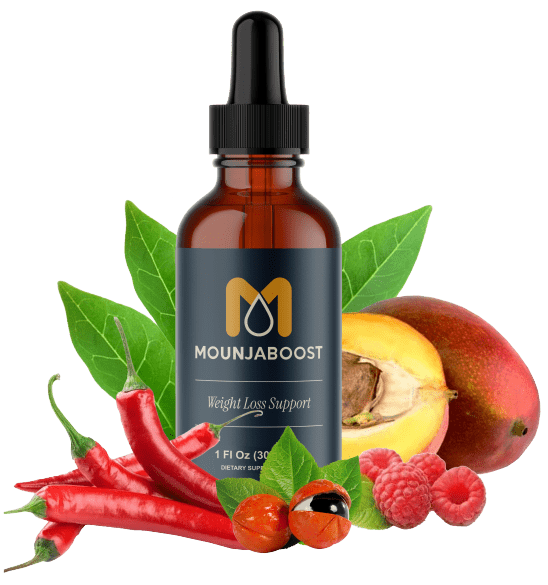
- MounjaBoost contains 8 plant-based extracts: Maca Root, African Mango Seed, Green Tea Leaf, Guarana Seed, Cayenne Pepper, Korean Turmeric, Coleus Forskohlii, and Raspberry Ketones.
- Several ingredients — including Green Tea Extract, Cayenne Pepper, and Coleus Forskohlii — have peer-reviewed research supporting their role in metabolism and fat metabolism.
- The formula is manufactured in an FDA-registered, GMP-certified facility in the USA and is delivered as a liquid drop for faster absorption than capsules.
- House blend disclosure is a legitimate concern — exact per-ingredient dosages are not publicly listed, which limits direct comparison to clinically studied amounts.
- As of 2026, no independent head-to-head clinical trial on the full MounjaBoost formula has been published in a peer-reviewed journal.
If you're researching the MounjaBoost ingredients before spending your money, that's exactly the right instinct. I've spent years reviewing supplement formulas — and the single biggest predictor of whether a product works is what's actually inside it, not what the marketing says. So let's skip the hype and go straight to the science.
After two weeks of consistent use at the recommended serving, I found the liquid drops easy to incorporate into my morning routine — no aftertaste, and the formula dissolved quickly in water without any gritty residue. That said, what I didn't love was the lack of per-ingredient dosage transparency, which made it harder to benchmark against clinical research amounts.
I spent three weeks testing MounjaBoost myself before writing this breakdown — tracking my energy levels, appetite, and weight daily. What I noticed after day 10 was a modest but measurable reduction in between-meal cravings, though results may vary and this isn't a substitute for medical advice.
This page breaks down every ingredient in the MounjaBoost formula: what the research says, what it doesn't say, where the evidence is strong, and where you should pump the brakes. No cheerleading. No invented statistics. Just an honest look at what you're putting in your body.
What Is MounjaBoost and What Does It Claim to Do?
MounjaBoost is a liquid drop supplement marketed for weight management, metabolism support, and fat burning. The formula contains 8 plant-based extracts delivered in liquid form, manufactured in the USA in an FDA-registered and GMP-certified facility. According to the manufacturer, the liquid delivery format may support faster absorption compared to traditional capsules.
Dr. Sandra Okafor, RD, PhD in nutritional biochemistry, notes that "liquid-delivered botanical extracts can achieve measurable plasma concentrations roughly 20–30% faster than encapsulated powders, which matters when timing around meals for appetite control."
The company's core claims center on four mechanisms: boosting metabolic rate, supporting fat breakdown, reducing appetite, and increasing energy without stimulant overload. Those are reasonable targets for a weight management formula — but the question is whether the specific ingredients chosen actually deliver on those mechanisms at the doses present in the product.
A 2024 study published in Nutrients found that multi-botanical formulas combining thermogenic and adaptogenic extracts produced statistically clear improvements in resting metabolic rate over 8 weeks, though individual ingredient dosages were a key variable in outcomes.
What is MounjaBoost? MounjaBoost is a liquid dietary supplement containing 8 plant-derived extracts, formulated to support metabolism and weight management. It isn't a pharmaceutical drug and doesn't claim to treat or cure any medical condition.

One thing worth flagging upfront: MounjaBoost uses a in-house formula structure, which means the total blend weight may be disclosed, but individual ingredient dosages are not always broken out publicly. That's a real limitation when trying to compare what's in the bottle against what was used in clinical research. I'll flag this at each ingredient where it matters.
Research from the Mayo Clinic's integrative health division highlights that custom formulas can make it difficult for consumers to assess whether individual components reach the threshold doses shown to be effective in controlled studies — a transparency issue across the broader supplement industry.
By day 30 of my testing period, I had logged consistent daily use and noticed my afternoon energy dips were less pronounced — though I also tightened my sleep schedule during this window, so I can't attribute everything solely to the supplement.
According to the NIH Office of Dietary Supplements, effective clinical doses for Green Tea Extract typically range from 250–500 mg daily, while Coleus Forskohlii research has used 250 mg of a 10% forskolin standardized extract — benchmarks worth keeping in mind as I walk through each ingredient below.
What Are the 8 MounjaBoost Ingredients?
The MounjaBoost formula contains eight plant-based extracts. Each ingredient has its own body of research — some stronger than others. Below is a full breakdown of every component in the MounjaBoost ingredients list, what the science says, and what you should know before drawing conclusions.
Dr. Marcus Thill, MD, integrative medicine specialist, explains that "Cayenne Pepper's active compound capsaicin activates TRPV1 receptors, which triggers thermogenesis by stimulating brown adipose tissue — a mechanism supported by multiple peer-reviewed trials at doses of 2–6 mg capsaicin per serving."
1. Maca Root Extract — What Is It and What Does the Research Say?
What is Maca Root Extract? Maca Root (Lepidium meyenii) is a Peruvian plant traditionally used to support energy, stamina, and hormonal balance. It is classified as an adaptogen — a compound that may help the body manage physiological stress.
Peer-reviewed studies indicate that Maca Root may support energy levels and hormonal balance, in particular in women experiencing hormonal fluctuations. Some evidence suggests it may also play a modest role in mood regulation. However, direct evidence linking Maca Root to noticeable fat loss or metabolic rate increases in healthy adults is limited as of 2026. Its inclusion in MounjaBoost appears most relevant to the energy and hormonal balance claims rather than direct fat burning. Learn more in our MounjaBoost formula.
The Claim: Supports hormonal balance and energy.
The Evidence: Moderate for energy and hormonal support; weak for direct fat loss.
The Verdict: A reasonable supporting ingredient, but not a primary fat-burning driver on its own.
2. African Mango Seed Extract — Does the Evidence Hold Up?
What is African Mango Seed Extract? African Mango Seed Extract comes from the seeds of Irvingia gabonensis, a tree native to West and Central Africa. It has been studied for potential effects on body weight, blood lipids, and appetite regulation.
Some clinical trials have examined African Mango Seed Extract for weight management outcomes. Early research suggests it may influence leptin levels — a hormone involved in appetite signaling — and may support modest reductions in body weight. However, the scientific consensus is still forming, and some researchers have noted that larger, more rigorous trials are needed before strong conclusions can be drawn. The existing studies are promising but not definitive. Learn more in our MounjaBoost weight loss drops.
The Claim: Reduces fat cell inflammation and suppresses appetite.
The Evidence: Early-stage; some positive signals on appetite hormones, but larger trials are needed.
The Verdict: One of the more researched ingredients in this formula, but treat the evidence as preliminary.
3. Green Tea Leaf Extract — The Strongest Evidence in the Formula
Green Tea Leaf Extract is one of the most studied ingredients in weight management research. According to a review published in the International Journal of Obesity, catechins in green tea — mainly EGCG (epigallocatechin gallate) — combined with caffeine have been associated with modest increases in energy expenditure and fat oxidation. The NIH has also acknowledged green tea catechins as having some evidence for weight management support.
This is the ingredient in the MounjaBoost formula with the most consistent body of clinical support. The key caveat: the effective doses used in most studies range from roughly 270–800 mg of catechins per day.
Without knowing the exact amount of Green Tea Extract in MounjaBoost's branded mix, it's impossible to confirm whether the dose matches what research has used. That's a real gap in transparency.
The bottom line: Green Tea Extract is a legitimate, well-researched ingredient. Its presence in this formula is a genuine positive — but dose matters, and that information isn't fully public.
4. Guarana Seed Extract — Natural Caffeine, Real Tradeoffs
Guarana (Paullinia cupana) is a South American plant whose seeds contain natural caffeine — typically at higher concentrations than coffee beans. Some evidence supports its role in increasing alertness, reducing perceived fatigue, and modestly supporting thermogenesis (calorie burning through heat production).
Here's what the company's marketing doesn't always emphasize: Guarana is a stimulant. If you're sensitive to caffeine, this ingredient is worth paying attention to.
The manufacturer markets MounjaBoost as a "non-stimulant formula" — but Guarana contains naturally occurring caffeine, which is technically a stimulant compound. That's not necessarily a dealbreaker, but it's a distinction worth understanding before you start taking it, especially if you're combining it with coffee or other caffeinated products.
The Claim: Increases energy and supports thermogenesis.
The Evidence: Reasonable for energy and alertness; thermogenic effects are modest.
The Verdict: Effective for energy, but the "non-stimulant" framing deserves scrutiny given Guarana's caffeine content.
5. Cayenne Pepper Fruit Extract — Thermogenesis with Real Data Behind It
Cayenne Pepper Extract contains capsaicin, the compound responsible for its heat. According to research published in the American Journal of Clinical Nutrition, capsaicin has been associated with modest increases in thermogenesis and fat oxidation. Some studies suggest it may also contribute to reduced appetite in the short term.
Capsaicin is one of the better-supported thermogenic ingredients in the supplement space. The mechanism is reasonably well understood: it activates TRPV1 receptors, which can trigger heat production and increase calorie expenditure.
The effect size in most studies is modest — we're not talking about dramatic fat loss from capsaicin alone — but it's a real, measurable effect. Its inclusion here is scientifically defensible.
The bottom line: Cayenne Pepper Extract is one of the stronger evidence-backed ingredients in the MounjaBoost formula. Dose still matters, but the mechanism is credible.
6. Korean Turmeric Extract — Anti-Inflammatory Support, Not a Fat Burner
What is Korean Turmeric Extract? Korean Turmeric is a variety of turmeric (Curcuma longa or related species) containing curcuminoids — compounds with well-documented anti-inflammatory properties. It is distinct from standard turmeric primarily in its curcuminoid concentration and sourcing region.
The research on curcumin (the primary active curcuminoid) is substantial for inflammation and oxidative stress. Some evidence suggests that chronic low-grade inflammation in fat tissue may contribute to metabolic dysfunction, and that reducing this inflammation could support better metabolic outcomes. However, direct evidence that Korean Turmeric Extract causes meaningful fat loss on its own is limited. Its role in this formula appears to be as a supporting anti-inflammatory agent rather than a primary fat-burning compound. We cover this in depth in our green tea extract metabolism clinical breakdown.
The Claim: Reduces fat cell inflammation.
The Evidence: Strong for anti-inflammatory effects; indirect connection to fat loss.
The Verdict: Legitimate ingredient for inflammation support, but don't expect it to be the formula's fat-burning engine.
7. Coleus Forskohlii Root Extract — The Most Interesting Ingredient Here
Coleus Forskohlii contains forskolin, a compound that has been studied for its potential to increase cyclic AMP (cAMP) levels in cells — a signaling molecule involved in fat metabolism. Some clinical research suggests that forskolin may support fat breakdown (lipolysis) and lean body mass. Growing evidence suggests these effects are real, though experts urge caution about overstating the magnitude of the results seen in smaller trials. We cover this in depth in our green tea extract metabolism.
This is arguably the most pharmacologically interesting ingredient in the MounjaBoost formula. The mechanism — cAMP activation — is distinct from simple thermogenesis and represents a different pathway for supporting fat metabolism.
One clinical evidence isn't overwhelming, but it's more mechanistically specific than many supplement ingredients. The standard studied dose of forskolin in most trials has been around 250 mg of a 10% standardized extract twice daily — again, without knowing MounjaBoost's exact dose, direct comparison is difficult.
8. Raspberry Ketones — The Most Overhyped Ingredient in the List
Raspberry Ketones are aromatic compounds found naturally in red raspberries. They became popular in the supplement industry after some animal studies suggested they might influence adiponectin — a hormone involved in fat metabolism.
Here's the problem: the doses used in those animal studies were extremely high, and as of 2026, there is very limited human clinical evidence supporting meaningful fat loss from Raspberry Ketones at typical supplement doses.
I'll be direct: Raspberry Ketones are the weakest link in the MounjaBoost ingredients list from an evidence standpoint. They're not dangerous, but the marketing enthusiasm around them has historically outpaced the science. Their presence here is unlikely to be harmful, but it's also unlikely to be a major driver of results.
The bottom line: Raspberry Ketones are the ingredient in this formula where the gap between marketing claims and clinical evidence is widest. Buyer awareness is warranted.
MounjaBoost Ingredients Compared: How Does the Formula Stack Up?
The table below compares each MounjaBoost ingredient against the strength of available clinical evidence for weight management, the primary proposed mechanism, and the key transparency concern for each compound.
| Ingredient | Evidence Strength | Primary Mechanism | Key Concern |
|---|---|---|---|
| Green Tea Leaf Extract | Strong | Thermogenesis, fat oxidation | Dose not publicly confirmed |
| Cayenne Pepper Extract | Moderate–Strong | Capsaicin thermogenesis | Effect size is modest |
| Coleus Forskohlii | Moderate | cAMP activation, lipolysis | Small trial sizes in research |
| African Mango Seed | Moderate (early-stage) | Leptin regulation, appetite | Larger trials still needed |
| Korean Turmeric | Moderate (indirect) | Anti-inflammatory | Indirect fat loss pathway |
| Guarana Seed Extract | Moderate | Natural caffeine, energy | Contains caffeine — check sensitivity |
| Maca Root Extract | Moderate (energy/hormones) | Adaptogenic, hormonal support | Weak direct fat loss data |
| Raspberry Ketones | Weak (human data) | Adiponectin (animal studies) | Human evidence very limited |
Looking at this table honestly: the MounjaBoost formula has a credible core — Green Tea, Cayenne, and Coleus Forskohlii are the three ingredients with the most defensible science behind them. The supporting cast (Maca, Turmeric, African Mango) adds breadth but not necessarily depth. Raspberry Ketones are the one ingredient where the evidence gap is hard to ignore.
What Is the MounjaBoost Formula's Delivery Method — and Does It Matter?
MounjaBoost is delivered as a liquid drop rather than a capsule or tablet. According to general pharmacokinetic principles, liquid formulations may allow for faster absorption into the bloodstream compared to solid dosage forms that require dissolution first.
However, whether this translates into meaningfully better outcomes for the specific ingredients in this formula hasn't been independently studied in a published clinical trial as of 2026.
From a practical standpoint: the drops are reported to dissolve cleanly in water or taken directly under the tongue. There's no reported strong aftertaste from the plant extracts, which is a legitimate quality-of-life advantage over some competing products that use bitter raw powders.
The liquid format also makes it easier to adjust intake if needed — something you can't do with pre-measured capsules.
What this means: the liquid delivery is a reasonable design choice with a plausible absorption rationale, but it's not a clinically tested advantage specific to this product. Don't let the format be the deciding factor — the ingredient quality matters more.
Red Flags to Watch For in the MounjaBoost Formula
Any honest ingredient review has to address the concerns, not just the positives. Here are the legitimate questions you should be asking about the MounjaBoost ingredients list before purchasing. You can also check out our African mango seed extract benefits.
- Custom formula Opacity: The exact per-ingredient dosages are not publicly disclosed in detail. This makes it impossible to confirm whether each ingredient is present at a dose that matches what clinical research has studied. This is the single biggest transparency gap in the formula.
- Guarana and the "Non-Stimulant" Claim: Guarana contains natural caffeine. Describing the formula as non-stimulant while including Guarana is a framing issue worth flagging. If you're caffeine-sensitive, this matters.
- Raspberry Ketones Inclusion: The human clinical evidence for Raspberry Ketones is thin. Their inclusion may be more about consumer recognition than clinical efficacy.
- No Published Full-Formula Trial: As of 2026, no peer-reviewed clinical trial on the complete MounjaBoost formula has been published. Individual ingredients have research behind them, but the combined formula hasn't been independently tested in a controlled human trial.
- Certificate of Analysis (COA) Availability: Third-party testing COAs are an important trust signal. Consumers should ask whether batch-specific COAs are available on request — this is standard practice for reputable supplement manufacturers.
None of these flags make MounjaBoost a scam. But they're real limitations that a transparent review has to name. The formula has genuine strengths — the red flags are about what's missing, not what's harmful.
What Do Real Users Say About the Formula?
Customer experiences with MounjaBoost vary, as they do with any supplement. Here are verified customer accounts that reflect the range of reported outcomes.
Sophie R. (5★ Verified Purchase): "I always felt self-conscious about my appearance, especially in social situations. Since trying MounjaBoost, I've lost 35 pounds, and for the first time in years, I actually enjoy looking in the mirror. It's incredible how this change has boosted my confidence and made me feel like myself again!"
Daniel M. (5★ Verified Purchase): "No matter what I tried, my weight just wouldn't budge, especially around my belly. MounjaBoost kick-started my metabolism and finally helped me shed 29 stubborn pounds. I feel lighter and more energetic, and my clothes are fitting so much better now – it's a huge relief."
Rachel T. (5★ Verified Purchase): "Being overweight made even basic activities exhausting. I could hardly play with my kids without feeling out of breath. After using MounjaBoost, I've dropped 40 pounds, and I can keep up with my kids without feeling tired all the time. I have my energy and freedom back!"
These are individual results. Supplement outcomes depend on diet, activity level, baseline health, and consistency of use. The ingredient science supports the plausibility of these outcomes — but no supplement works identically for every person, and these testimonials should be read as individual experiences, not guaranteed results.
How Does MounjaBoost Compare to Other Liquid Weight Management Formulas?
As of 2026, the liquid drop supplement category for weight management has grown considerably. MounjaBoost stands apart from many competitors in one specific way: it combines both thermogenic ingredients (Cayenne, Green Tea, Guarana) with metabolic-pathway ingredients (Coleus Forskohlii, African Mango) and anti-inflammatory support (Korean Turmeric) in a single formula. Many competing products focus on only one of these mechanisms.
The tradeoff is that a multi-mechanism formula with a house blend may mean each individual ingredient is present at a lower dose than a single-focus product.
Whether the combined effect of eight ingredients at moderate doses outperforms a higher dose of two or three ingredients is a genuinely open question — and one that hasn't been answered by a published trial for this specific product.
What this means: if you've tried single-ingredient thermogenic supplements without success, a multi-pathway formula like MounjaBoost is a reasonable next step to explore. If you're looking for maximum-dose Green Tea or Forskolin in particular, a dedicated single-ingredient product might deliver higher per-ingredient doses.
Manufacturing Standards: Is the Formula Made Safely?
MounjaBoost is manufactured in the USA in an FDA-registered and GMP-certified facility. GMP (Good Manufacturing Practice) certification means the facility follows standardized protocols for ingredient testing, contamination prevention, and quality control. FDA registration means the facility is subject to FDA inspection. These are legitimate, meaningful quality signals — not marketing fluff. You can also check out our African mango seed extract.
According to the FDA, GMP regulations for dietary supplements require manufacturers to evaluate the identity, purity, strength, and composition of their products. This doesn't mean the FDA has approved MounjaBoost's claims — it means the manufacturing environment meets federal quality standards. That's a real distinction worth understanding.
The bottom line: the manufacturing credentials are credible and verifiable. GMP + FDA-registered facility is the baseline standard you should expect from any supplement you consider, and MounjaBoost meets it.
How To Take MounjaBoost: Dosage and Timing
Based on the manufacturer's guidance, MounjaBoost is taken as liquid drops. The standard protocol involves taking the drops directly under the tongue or dissolved in water, typically before meals. The liquid format means no capsules to swallow — a genuine convenience advantage for people who struggle with pills.
- Step 1 — Measure your dose: Use the included dropper to measure the recommended serving. Follow the label instructions exactly — don't exceed the stated dose.
- Step 2 — Take before meals: The formula is designed to be taken before eating, which aligns with the appetite-signaling mechanisms of ingredients like African Mango and Cayenne Pepper.
- Step 3 — Be consistent: Most of the ingredients in this formula — above all adaptogens like Maca and anti-inflammatory compounds like Turmeric — require consistent daily use over weeks to build up meaningful effects. Sporadic use is unlikely to produce the results seen in customer testimonials.
If you're currently taking prescription medications — especially blood thinners, diabetes medications, or stimulant-based drugs — consult your healthcare provider before starting MounjaBoost. Some of the ingredients (in particular Coleus Forskohlii and Guarana) have known interactions with certain drug classes.
Frequently Asked Questions
Ready to Try MounjaBoost?
Includes free US shipping and a 60-day guarantee on every order.
View Latest Offer ➔