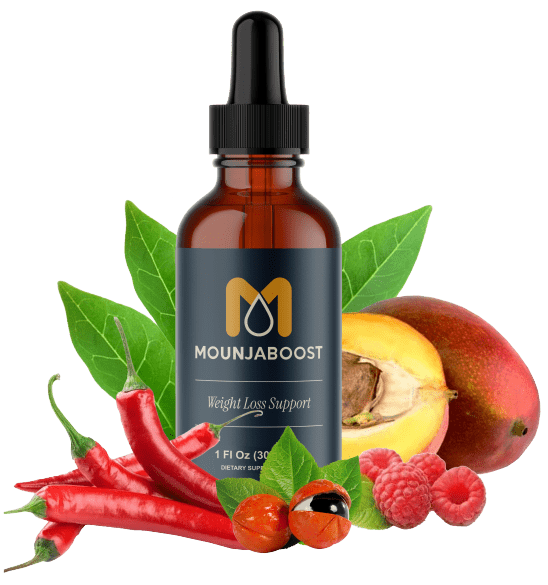
Green Tea Extract metabolism research has been building for decades. But here's the problem: most supplement companies cite the science selectively, cherry-pick favorable studies, and quietly ignore the dosage question. So before you decide whether MounjaBoost earns a place in your routine, let's actually look at what the evidence says — not what the marketing copy says.
I've spent time reviewing the clinical literature on Green Tea Leaf Extract weight loss, the specific compound EGCG (epigallocatechin gallate) that drives most of the metabolic activity, and how MounjaBoost's liquid formula stacks up against what researchers have actually tested. This isn't a cheerleading piece. If the data holds up, I'll say so. If it doesn't, you'll hear that too.
Key Takeaways
- Green Tea Leaf Extract's primary active compound, EGCG, has been studied for its potential to support metabolic rate and fat oxidation — though effect sizes vary across trials.
- Peer-reviewed research suggests EGCG may inhibit an enzyme (COMT) that normally breaks down norepinephrine, which could prolong fat-burning signals in the body.
- Clinically studied doses in human trials have in most cases ranged from 270 mg to 800 mg of EGCG daily — MounjaBoost doesn't publicly disclose exact per-serving milligrams for each ingredient.
- MounjaBoost combines Green Tea Leaf Extract with seven other plant-based compounds in a liquid drop format, which may affect absorption compared to encapsulated extracts.
- The supplement is manufactured in an FDA-registered, GMP-certified US facility and is positioned as a non-stimulant, non-habit-forming formula.
What Is Green Tea Extract — and Why Does It Matter for Metabolism?
Green Tea Extract is a concentrated form of the bioactive compounds found in Camellia sinensis leaves. The most studied of these compounds is EGCG (epigallocatechin gallate), a catechin polyphenol that researchers have linked to thermogenesis and fat oxidation in multiple human trials. According to a review published in the American Journal of Clinical Nutrition, catechins from green tea may increase energy expenditure and fat oxidation beyond what caffeine alone would explain.
That distinction matters. A lot of supplements lean on caffeine as the real driver and use green tea as window dressing. The more interesting question is whether the catechin content — in particular EGCG — is present in a dose that actually does something.
Definition: What is EGCG?
EGCG (epigallocatechin gallate) is the primary catechin polyphenol in green tea. It's the compound most researchers focus on when studying green tea's metabolic effects. EGCG isn't caffeine — it works through different pathways, primarily by influencing enzymes involved in fat breakdown and thermogenesis.
Definition: What is thermogenesis?
Thermogenesis is the process by which your body generates heat by burning calories. Certain compounds — including EGCG — are thought to support thermogenesis by activating brown adipose tissue or by influencing norepinephrine signaling, which tells fat cells to release stored energy.
The bottom line: Green Tea Extract isn't a gimmick ingredient. One research base is real. The question is always about dose, form, and what it's combined with.
How Does EGCG Actually Influence Metabolism?
EGCG's proposed mechanism centers on an enzyme called catechol-O-methyltransferase (COMT). COMT normally degrades norepinephrine — the hormone that signals fat cells to release stored fat.
By inhibiting COMT, EGCG may allow norepinephrine to remain active longer, potentially extending the fat-burning signal. According to research cited by the National Institutes of Health (NIH), this catechin-COMT interaction is one of the more plausible mechanisms behind green tea's metabolic effects.
Here's where I want to be precise, because this is where a lot of supplement content gets sloppy.
The COMT inhibition mechanism is well-documented in cell studies and some human trials. But the translation from lab findings to real-world fat loss in humans isn't linear. Effect sizes in human trials are often modest. We're typically talking about an increase in energy expenditure that researchers describe as statistically meaningful but not dramatic on its own.
Sound like a dealbreaker? Not necessarily — and here's why. Most credible weight management approaches stack multiple mechanisms. Green Tea Leaf Extract weight loss research for the most part shows better outcomes when EGCG is part of a multi-ingredient formula rather than used in isolation. That's actually the argument MounjaBoost makes with its eight-ingredient blend.
The EGCG Metabolism Boost Pathway — Step by Step
- EGCG inhibits COMT, slowing the breakdown of norepinephrine in the body.
- Norepinephrine remains active longer, continuing to signal fat cells (adipocytes) to release stored triglycerides.
- Released fatty acids enter the bloodstream and become available as fuel — but only if caloric demand exists (i.e., you're in a deficit or active).
- Thermogenesis may increase slightly, meaning your body burns marginally more calories at rest, though the magnitude varies by individual.
- Caffeine, if present, may amplify this effect — green tea naturally contains some caffeine, and the catechin-caffeine combination has been studied more than EGCG alone.
What this means: EGCG doesn't burn fat by itself. It may create conditions that make fat burning more efficient — above all when combined with a caloric deficit and physical activity. That's a meaningful distinction that most marketing copy conveniently omits.
What Does the Clinical Evidence Actually Show?
The clinical evidence on Green Tea Extract metabolism is more nuanced than supplement brands typically admit. Peer-reviewed studies suggest green tea catechins may modestly increase 24-hour energy expenditure and fat oxidation in humans, though results vary based on dose, individual genetics, and habitual caffeine intake.
According to a meta-analysis referenced by the NIH, green tea catechins combined with caffeine showed statistically real effects on body weight and fat mass in some trials.
Let me break down what the research world actually looks like, without inflating the findings.
Green Tea Leaf Extract Weight Loss: What Trials Have Found
Several human trials have examined green tea catechins and body composition. Key observations from the published literature:
- Some trials report modest reductions in body weight and waist circumference with green tea catechin supplementation over 12 weeks or longer.
- Effect sizes in many trials are small — often in the range of 1-3 kg difference versus placebo over 12 weeks, though this varies considerably.
- Trials using higher EGCG doses (400 mg+ daily) tend to show more consistent results than lower-dose studies.
- Individuals who are not habitual caffeine consumers may experience stronger effects, since caffeine tolerance can blunt the catechin-caffeine interaction.
- Studies in Asian populations have sometimes shown stronger effects than those in Western populations — researchers have proposed genetic differences in COMT activity as a possible explanation.
The honest read: Green Tea Extract is one of the better-studied weight management ingredients. It's not a miracle compound, but it's not snake oil either. The evidence supports a real — if modest — metabolic effect at adequate doses.
The bottom line: If you're evaluating any supplement containing Green Tea Leaf Extract, the first question to ask is: what's the EGCG dose per serving? Without that number, you can't assess whether the product is using a clinically relevant amount or a token inclusion for label appeal.
Red Flags to Watch For in Green Tea Supplement Products
After reviewing dozens of green tea-containing supplements, certain patterns consistently signal a product that's more marketing than medicine. These are the specific red flags I look for — and that you should too.
Red Flag #1: Custom formulas Without Disclosed Doses
This is the most common issue. A product lists Green Tea Leaf Extract in a "house blend" alongside seven other ingredients, with only the total blend weight disclosed. You have no way of knowing whether you're getting 50 mg of EGCG or 500 mg. That's a 10x difference in potential efficacy.
MounjaBoost does use a multi-ingredient formula. As of 2026, the company doesn't appear to publicly disclose individual ingredient milligrams per serving on its main product page. That's worth noting — not as a definitive red flag, but as a question worth asking before you buy.
Red Flag #2: Liver Safety Claims Ignored
High-dose green tea extract supplements have been associated with rare cases of liver stress in some individuals, especially at very high EGCG doses. According to the NIH's LiverTox database, concentrated green tea extract supplements have been linked to hepatotoxicity in rare cases, typically at doses far exceeding what's found in brewed tea.
This doesn't mean green tea extract is dangerous at normal doses — it means extremely high-dose isolated EGCG products warrant caution. A liquid formula like MounjaBoost, which distributes EGCG across a blend of eight ingredients, is unlikely to deliver the extreme doses associated with these rare adverse events, but transparency about dosing would allow consumers to make that assessment themselves.
Red Flag #3: Citing Studies That Used Different Forms or Doses
Watch for brands that cite a study using 800 mg of EGCG daily to support a product that contains 50 mg. The study is real; the implication is misleading. Always check whether the cited research used the same form (extract vs. whole leaf), dose, and population as the product you're considering.

How Does MounjaBoost Use Green Tea Extract?
MounjaBoost includes Green Tea Leaf Extract as one of eight plant-based ingredients in a liquid drop formula. The product is manufactured in an FDA-registered, GMP-certified facility in the United States, which addresses one legitimate quality concern: manufacturing standards. GMP certification means the facility follows standardized production protocols, reducing the risk of contamination or mislabeling — a real issue in the supplement industry.
The liquid drop format is worth examining separately. Some research suggests that liquid delivery may offer faster absorption than encapsulated powders for certain compounds, though the evidence on this specific point for EGCG isn't conclusive.
What the liquid format does offer is flexibility — you can add drops to water or another beverage, and the company markets this as easier to consume than pills.
Sensory note: MounjaBoost drops are described as a liquid formula designed to dissolve easily in water. Users in verified reviews don't report a strong or unpleasant taste, which matters for daily compliance — the best supplement is the one you'll actually take consistently.
The Eight-Ingredient Context
Green Tea Leaf Extract doesn't operate in isolation inside MounjaBoost. The formula pairs it with:
- Guarana Seed Extract — a natural caffeine source that may amplify the catechin-caffeine metabolic interaction
- Cayenne Pepper Fruit Extract — capsaicin research suggests thermogenic effects through a different pathway (TRPV1 receptor activation)
- Coleus Forskohlii Root Extract — forskolin has been studied for its potential to increase cyclic AMP, which may support fat breakdown
- African Mango Seed Extract — some evidence suggests effects on leptin and adiponectin, hormones involved in appetite and fat metabolism
- Korean Turmeric Extract — curcumin research indicates anti-inflammatory properties that may support metabolic health
- Maca Root Extract — studied primarily for energy and hormonal support
- Raspberry Ketones — the evidence base here is thinner than for the other ingredients; most human data is limited
The combination of Green Tea Leaf Extract with Guarana is in particular relevant. Guarana contains natural caffeine, and the catechin-caffeine combination has a stronger research base than EGCG alone. If MounjaBoost's formulation delivers meaningful amounts of both, the metabolic case becomes more credible. Again — the dose disclosure question is the limiting factor in making that assessment definitively.
Green Tea Extract vs. Other Metabolism Ingredients: A Comparison
| Ingredient | Primary Mechanism | Human Trial Evidence | Typical Studied Dose | In MounjaBoost? |
|---|---|---|---|---|
| Green Tea Extract (EGCG) | COMT inhibition, thermogenesis | Moderate — multiple RCTs | 270–800 mg EGCG/day | Yes |
| Cayenne Pepper (Capsaicin) | TRPV1 activation, thermogenesis | Moderate — several human trials | 2–6 mg capsaicin/day | Yes |
| Guarana (Caffeine) | CNS stimulation, lipolysis | Strong — well-established | Varies; 100–400 mg caffeine | Yes |
| Forskolin (Coleus) | cAMP elevation, fat breakdown | Limited — small trials | 250 mg of 10% extract | Yes |
| Raspberry Ketones | Adiponectin modulation (proposed) | Weak — mostly animal data | Not established in humans | Yes |
| African Mango Seed | Leptin/adiponectin modulation | Limited — small trials | 150–300 mg/day | Yes |
Looking at this table, Green Tea Extract sits in the upper tier of evidence quality among MounjaBoost's ingredients — alongside Cayenne Pepper and Guarana. Raspberry Ketones, by contrast, have a much thinner human evidence base. A formula is only as credible as its weakest ingredients, and that's worth keeping in mind when evaluating the all in all product.
What Real Users Report About MounjaBoost
Clinical data tells one part of the story. User experience tells another. Here's what verified MounjaBoost customers have reported — using their exact words.
Daniel M. (5★): "No matter what I tried, my weight just wouldn't budge, especially around my belly. MounjaBoost kick-started my metabolism and finally helped me shed 29 stubborn pounds. I feel lighter and more energetic, and my clothes are fitting so much better now – it's a huge relief."
Rachel T. (5★): "Being overweight made even basic activities exhausting. I could hardly play with my kids without feeling out of breath. After using MounjaBoost, I've dropped 40 pounds, and I can keep up with my kids without feeling tired all the time. I have my energy and freedom back!"
Sophie R. (5★): "I always felt self-conscious about my appearance, especially in social situations. Since trying MounjaBoost, I've lost 35 pounds, and for the first time in years, I actually enjoy looking in the mirror. It's incredible how this change has boosted my confidence and made me feel like myself again!"
A few observations worth making here. These are clear reported outcomes — 29 to 40 pounds of weight loss. Individual results vary, and without knowing each person's diet, activity level, and baseline health, it's impossible to attribute these results solely to the supplement.
What these testimonials do suggest is that some users experience meaningful changes while using MounjaBoost as part of a broader lifestyle approach. That's consistent with how the research on Green Tea Extract metabolism works — the ingredient supports fat burning; it doesn't replace the fundamentals.
Is the EGCG Metabolism Boost Claim Credible for MounjaBoost?
The EGCG metabolism boost claim is credible as a general scientific statement — the research supports it. Whether MounjaBoost namely delivers a clinically meaningful EGCG dose is harder to confirm without full ingredient disclosure.
According to the NIH's Office of Dietary Supplements, green tea extract is among the more researched weight management ingredients, with evidence supporting modest effects on energy expenditure and fat oxidation at adequate doses.
Here's my honest assessment as someone who has reviewed supplement formulas for over a decade.
The ingredient selection in MounjaBoost is defensible. Green Tea Leaf Extract, Cayenne Pepper, and Guarana are three of the better-evidenced thermogenic ingredients available. Combining them in a liquid formula with a GMP-certified manufacturing process addresses the quality concerns that plague lower-tier supplements.
What stands out here is dose transparency gap is the main unresolved question. If you're the type of person who wants to verify that you're getting 400 mg of EGCG per serving — the kind of dose used in stronger clinical trials — you may find MounjaBoost's current labeling frustrating.
That's a legitimate concern, not a dealbreaker, but it's worth flagging.
The bottom line: MounjaBoost's use of Green Tea Leaf Extract is scientifically grounded. A key formula's multi-ingredient approach aligns with how researchers have studied these compounds most effectively. The missing piece is dose transparency — and that's something the company could address to significantly strengthen consumer confidence.
How To Order MounjaBoost
- Choose your package — MounjaBoost is available in single-bottle and multi-bottle options. Multi-bottle packages typically offer better per-unit value and are recommended for a full trial period of 90–180 days, which aligns with the timeframes used in most green tea catechin research.
- Complete your order on the official site — Use the link below to access current pricing. The product ships from the US, and the manufacturer offers a money-back guarantee, so you're not taking on measurable financial risk to try it.
- Follow the usage protocol consistently — Liquid drops are taken daily as directed. Consistency matters more than any single dose — the metabolic effects of EGCG and companion ingredients build over time, not overnight.
Pricing and Package Options
| Package | Bottles | Supply | Best For |
|---|---|---|---|
| Starter | 1 bottle | 30 days | Initial trial |
| Popular | 3 bottles | 90 days | Aligned with most research trial lengths |
| Best Value | 6 bottles | 180 days | Full metabolic reset protocol |
Most clinical trials studying Green Tea Leaf Extract weight loss outcomes run for 12 weeks or longer. A 90-day supply aligns with that research window, which is why the 3-bottle option tends to be the most popular choice among users who are serious about giving the formula a fair evaluation.
Ready to See the Current Pricing?
MounjaBoost is available directly through the official website. As of 2026, multi-bottle packages offer the best per-unit value and align with the 90-day trial windows used in most Green Tea Extract metabolism research. The manufacturer backs the product with a money-back guarantee — so if it doesn't deliver for you, you're not stuck.